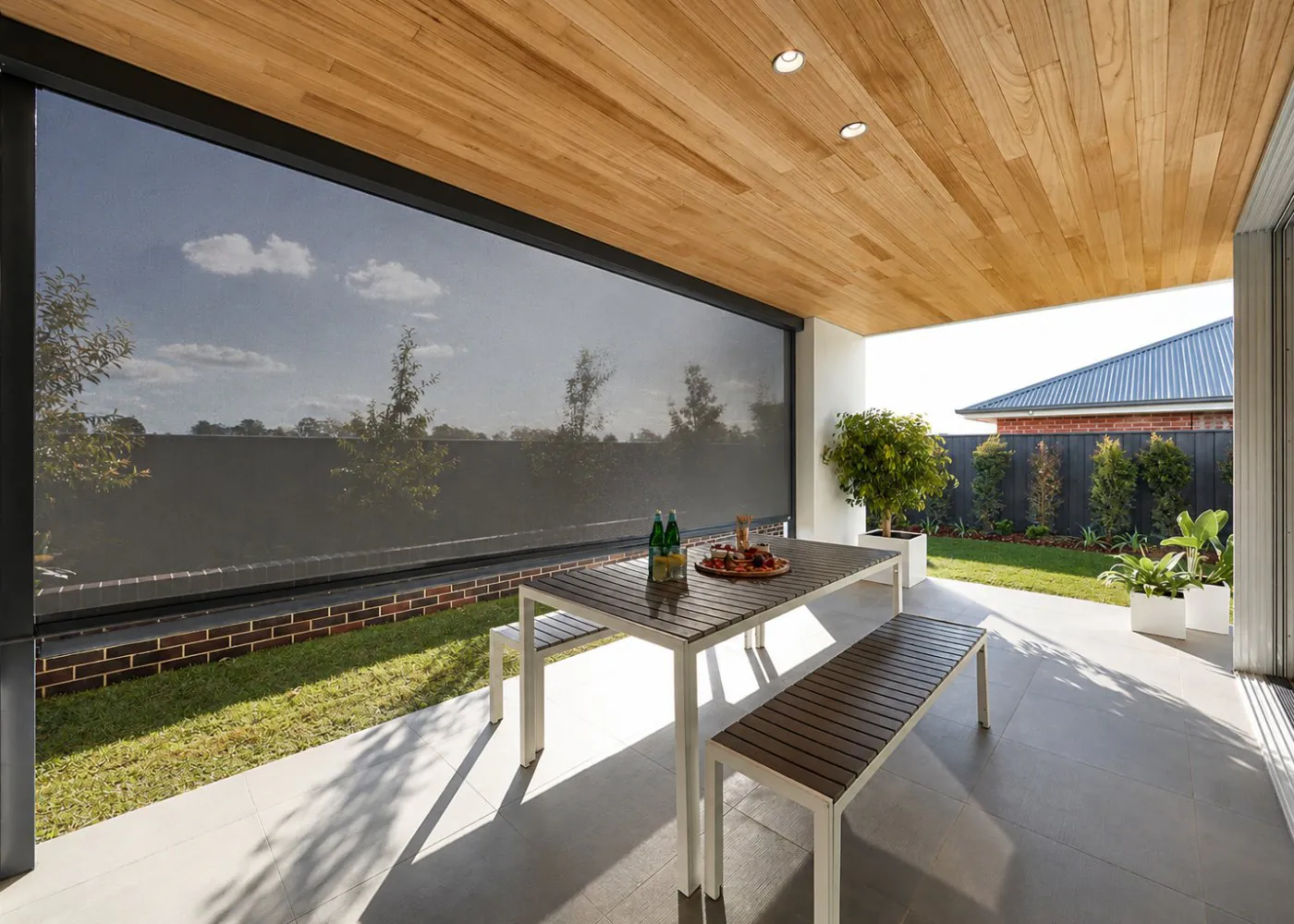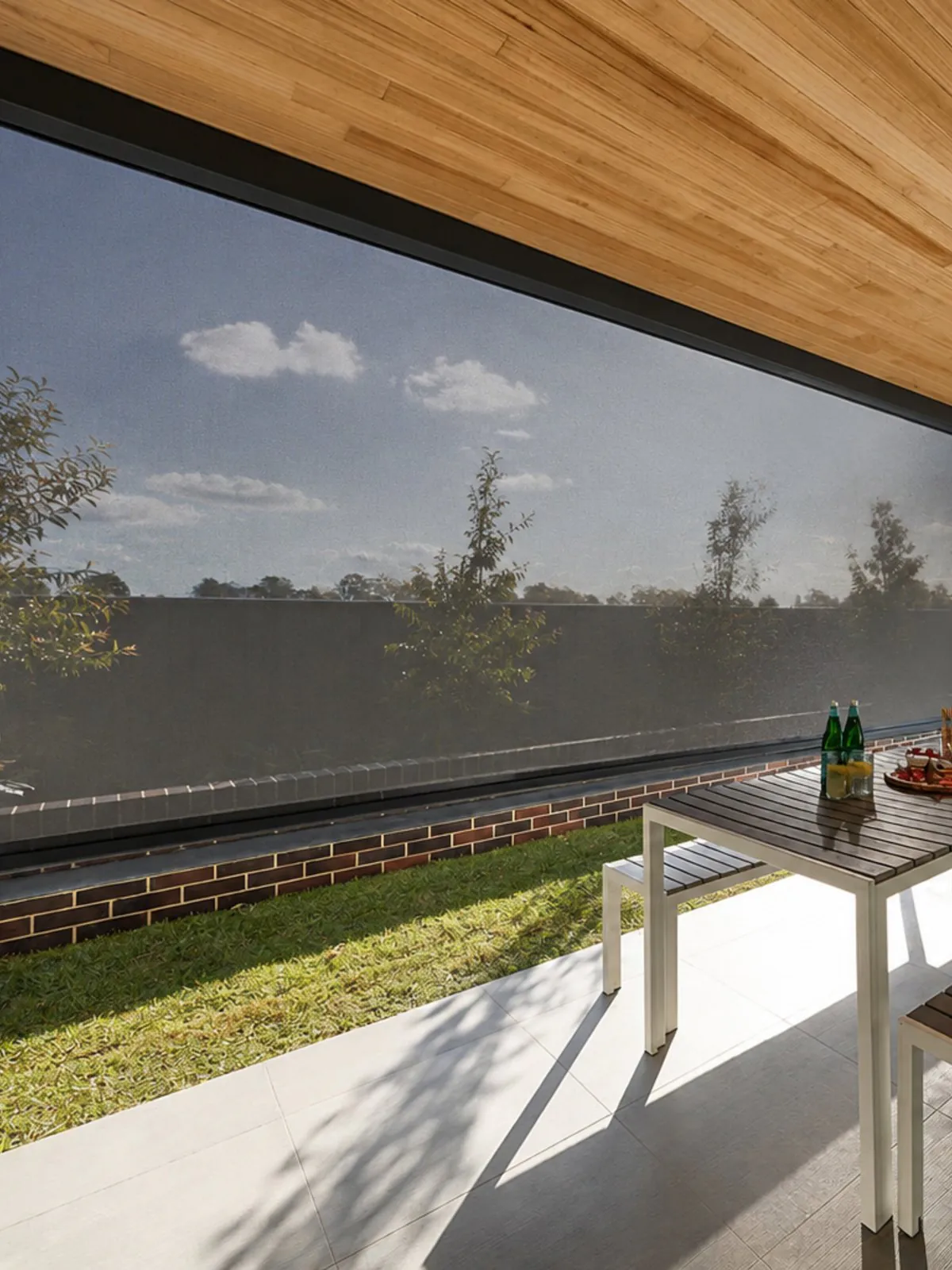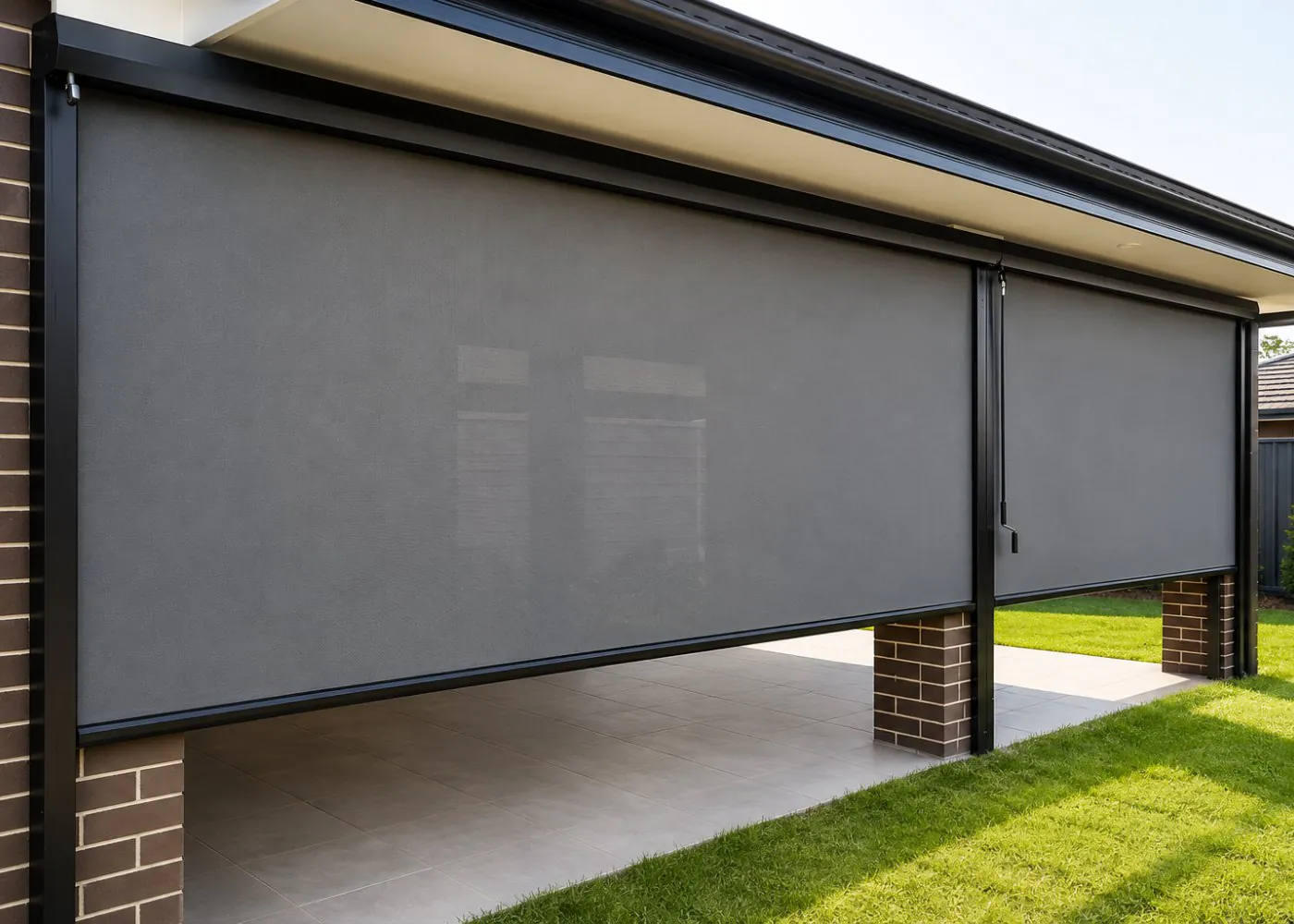
What screens fix on a terrace
- Wind — the most common reason a terrace empties early. Clear vinyl stops it and keeps the view; mesh softens it.
- Low afternoon sun — a west-facing terrace can lose its best hour to glare. Sun mesh at 5% to 10% keeps tables usable without closing the terrace off.
- A passing shower — under a roof or awning, clear vinyl keeps the rain off the sides so service doesn’t stop.
- Mosquitoes at dusk — bug mesh on the open sides of a covered terrace.
- Privacy from the street — tighter mesh by day. After dark, with the lights on, any mesh becomes see-through; blockout is the only fabric that stays private at night.
Start with the permit
In Montréal the permit decides what’s possible before the fabric does, and the rules change from borough to borough. Here is what the city’s own pages say, and why it matters for screens.
Every commercial terrace needs a permit
That applies to terraces on the public domain — sidewalks and streets — and to terraces on private land alike, and a public-domain permit has to be renewed every year. Each of the city’s 19 boroughs sets its own standards on top of the city-wide rules.
On the public domain, structures are tightly limited
Generally only retractable awnings and umbrellas are allowed, nothing may be anchored into the ground, and permanent structures such as pergolas are restricted in most boroughs. In practice, that means screens usually can’t simply be added to a sidewalk terrace. The seasons differ too: most boroughs allow public-domain terraces from April 15 to November 15; Anjou and Côte-des-Neiges–Notre-Dame-de-Grâce from May 1 to October 31; Lachine from April 1 to October 31; Outremont from March 15 to November 15; and Rosemont–La Petite-Patrie also allows year-round ephemeral terraces.
On private land, there’s more room
For a courtyard, rear terrace or rooftop, most boroughs permit retractable awnings, marquees and removable canvas structures when they’re made of fire-resistant materials, and some limit them to the season. This is where retractable screens usually fit — and where the fabric’s fire performance becomes part of the application.
The official details are on the city’s pages for public-domain terraces and terraces on private land. Check with your borough before you order anything.
On public-domain terraces, most boroughs prohibit electric and gas equipment, heaters included; Le Plateau-Mont-Royal and Outremont are the exceptions that allow heating and electric lighting. Wherever heaters aren’t an option, blocking the wind is the main lever you have on comfort.
At a glance
| Permit | Required for every commercial terrace in Montréal |
|---|---|
| Public domain | Renewed yearly · generally retractable awnings and umbrellas only · no ground anchoring |
| Private land | Awnings and removable canvas structures allowed in most boroughs if fire-resistant |
| Rules set by | Each of the 19 boroughs |
| Wind | Clear vinyl stops it · mesh softens it · wind sensor on anything left unattended |
| Late sun | Sun mesh at 5% – 10% |
| Rain | Clear vinyl, under a roof or awning |
| Fabric | Fiberglass-based — ask for the fire rating of the exact fabric |
Choosing screens for commercial use
- Motorized, not cranked. A terrace screen goes up and down every day, often several times, and usually by whoever is on shift. Motors make that one button — and several screens can move together. See motorized retractable screens.
- A wind sensor on anything left unattended. Clear vinyl and blockout catch wind like a sail; a sensor raises them before a gust can load them, including overnight and on days off.
- Lower clear vinyl in calm air. It goes down when it’s still and comes up when the wind rises — never the reverse. Worth adding to the opening checklist.
- Fabric that holds its shape and has a fire rating. The fabrics we use are fiberglass-based, which holds its shape through heat far better than polyester and generally performs better in fire. Ask for the fire rating of the exact fabric, and bring it to your borough with the application.
- Mixed fabrics on one terrace. Clear vinyl on the side the weather comes from, sun mesh facing the street or the setting sun. The comparison is in retractable screen fabrics.
Ottawa and Gatineau
Both cities have their own patio and terrace permits, separate from Montréal’s. The same screen choices apply; check the local rules before ordering.
Frequently asked questions
Do I need a permit to add screens to a restaurant terrace in Montréal?
Every commercial terrace in Montréal needs a permit, on the public domain or on private land, and each borough sets its own standards. Check with your borough before ordering screens.
Can I put retractable screens on a sidewalk terrace?
Usually not. On the public domain, boroughs generally allow only retractable awnings and umbrellas, nothing anchored into the ground, and restrict permanent structures. Screens fit best on terraces on private land.
What about a courtyard or rooftop terrace?
On private land, most boroughs allow retractable awnings, marquees and removable canvas structures when they’re made of fire-resistant materials. Ask for the fire rating of the exact fabric and include it with your application.
Which screen is best against wind on a terrace?
Clear vinyl stops wind and keeps the view, but it has to be raised in strong wind — a wind sensor does that automatically. Mesh softens the wind and can stay down in a breeze.
Are heaters allowed on Montréal terraces?
On public-domain terraces, most boroughs prohibit electric and gas equipment, including heaters. Le Plateau-Mont-Royal and Outremont allow heating and electric lighting.
Do you install screens for restaurants and cafés?
Yes. We measure on site, bring samples, recommend fabrics side by side, and installation is included.