The problem with ordinary blackout blinds
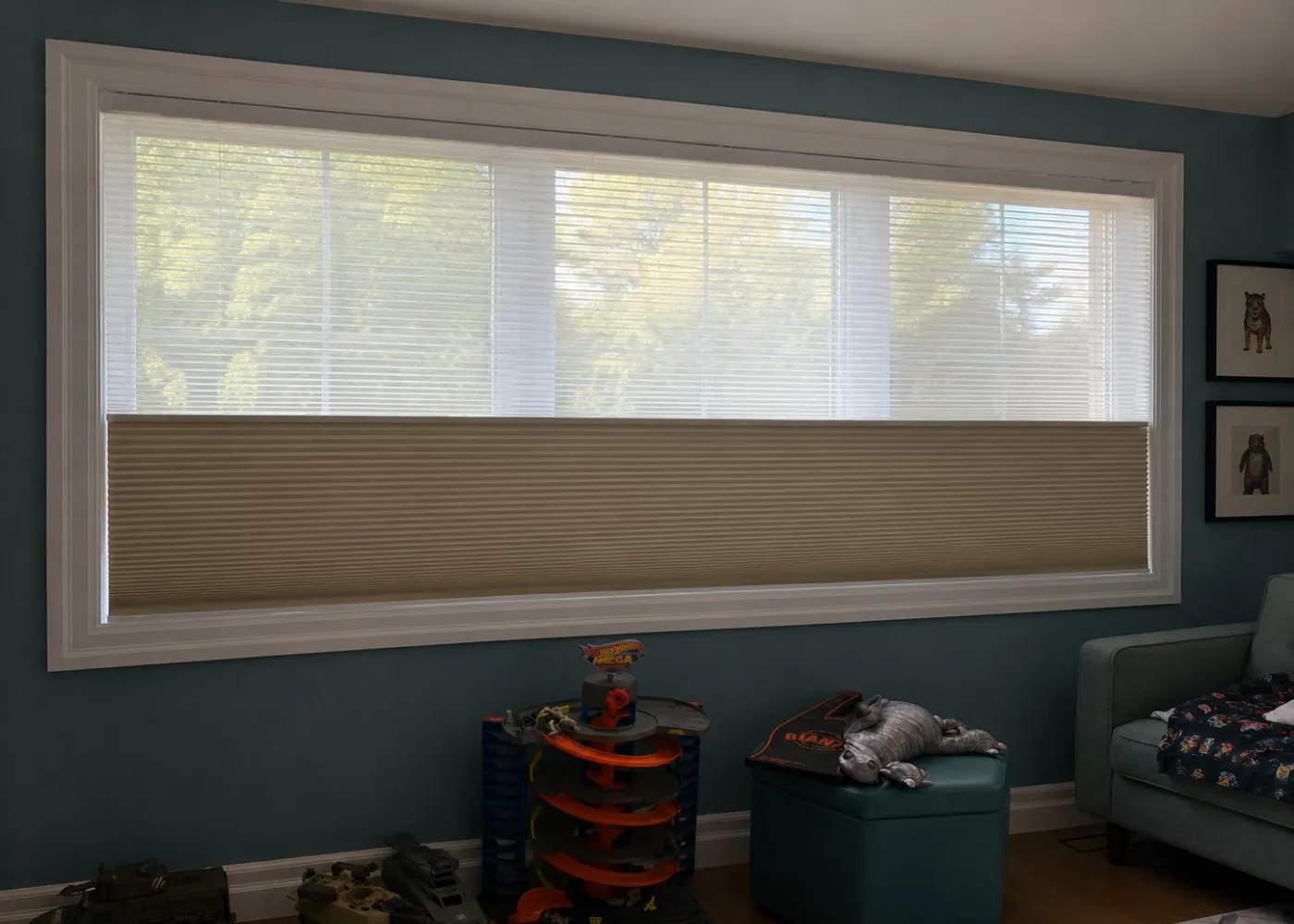
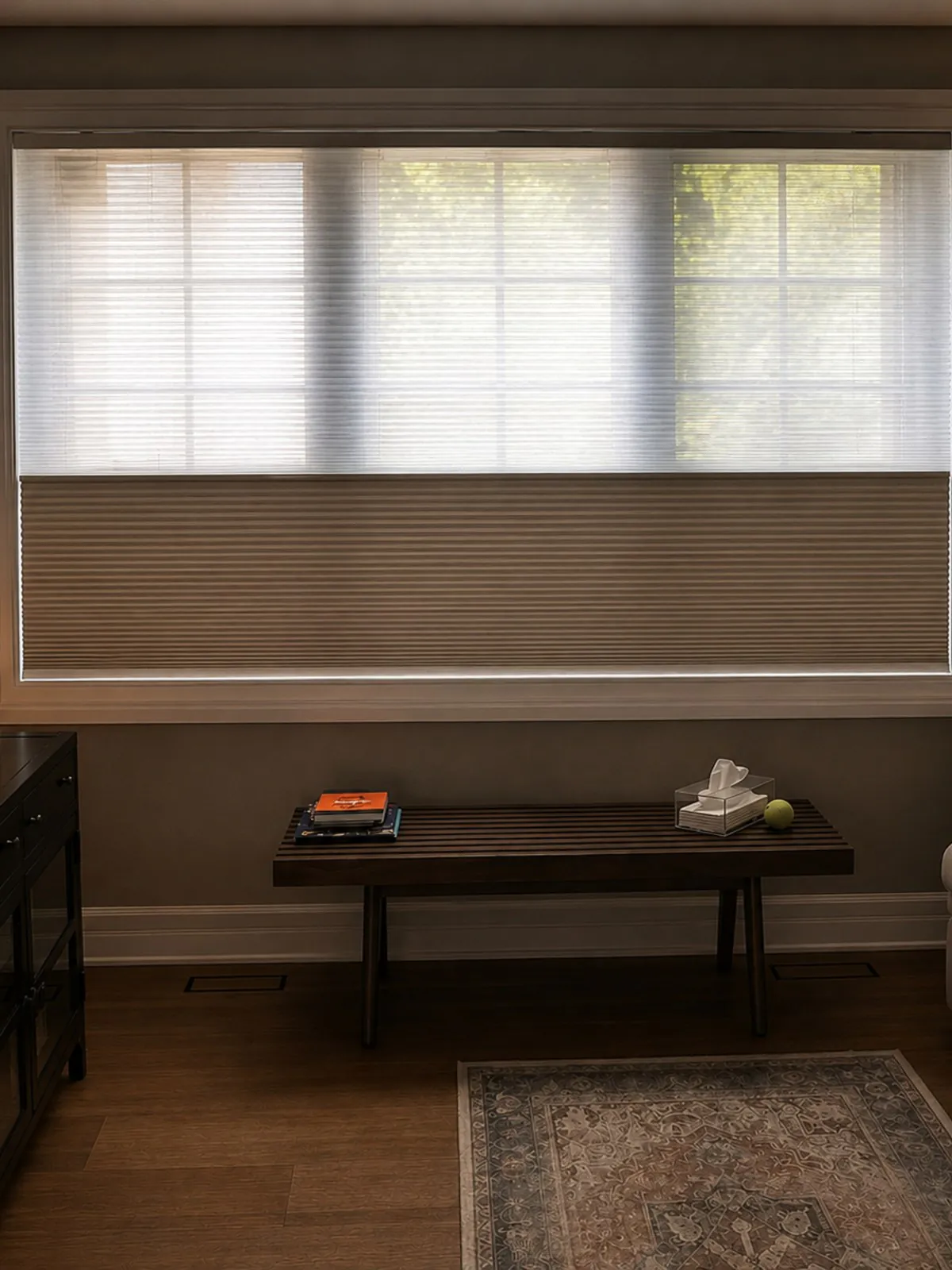
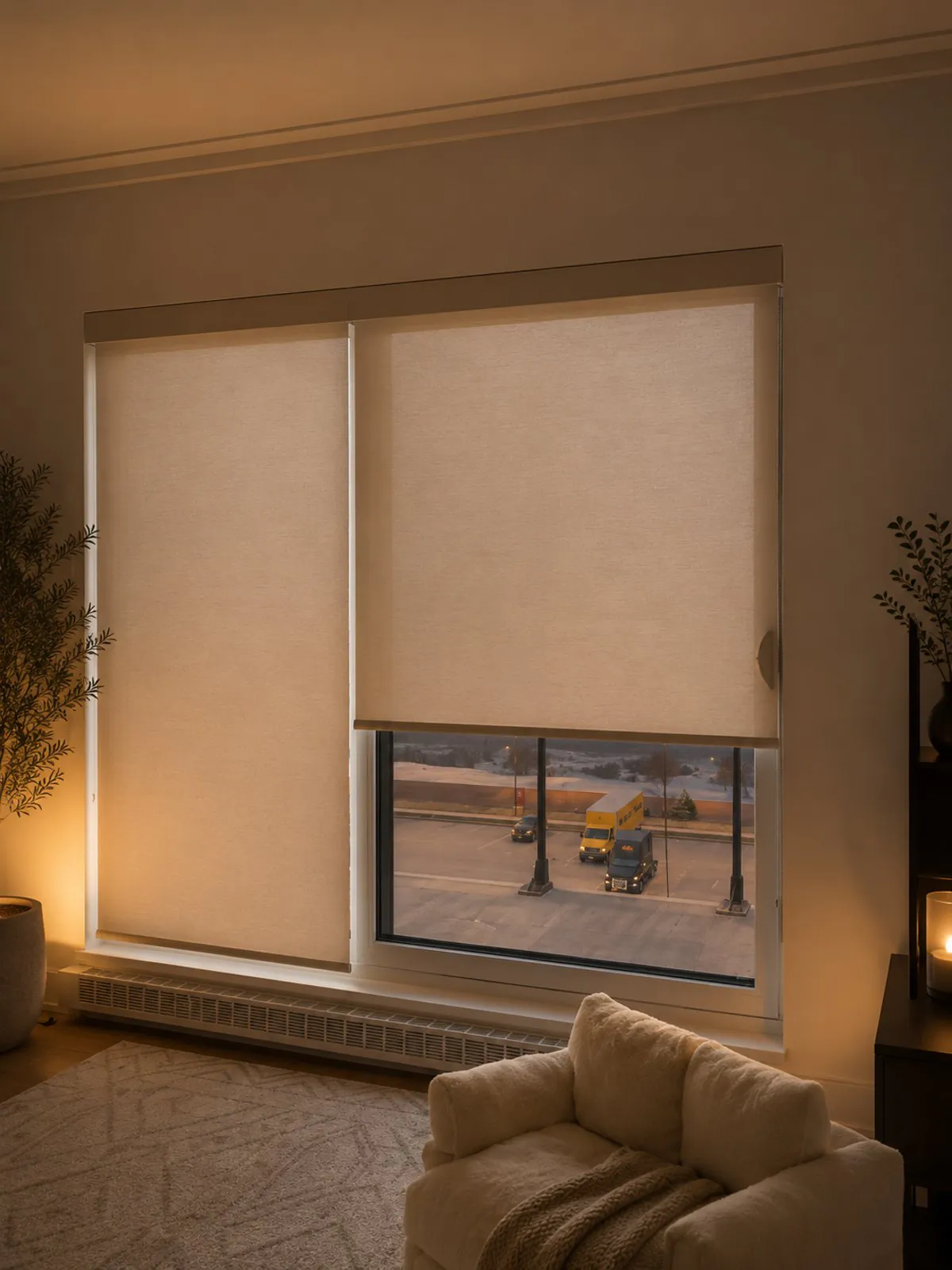
Blackout fabric is fully opaque, but an ordinary blind hangs a few millimetres inside the frame. Light pours around those edges as bright bars — and on a summer morning in Montreal that halo arrives before 5 a.m. You can add channels, curtains and overlap to fight it, but you’re patching gaps that the blind itself creates.
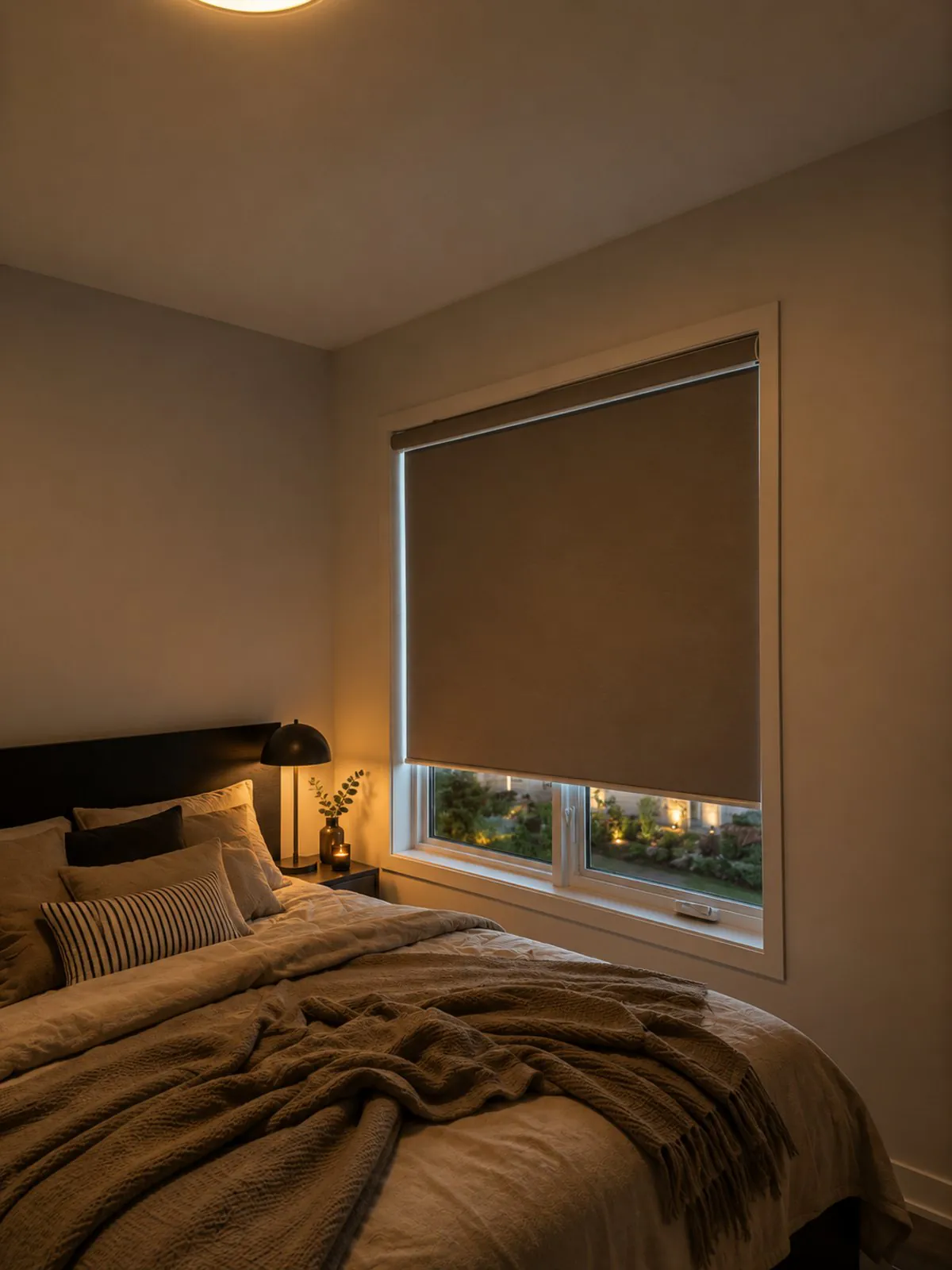
What makes a Blockout Blind different
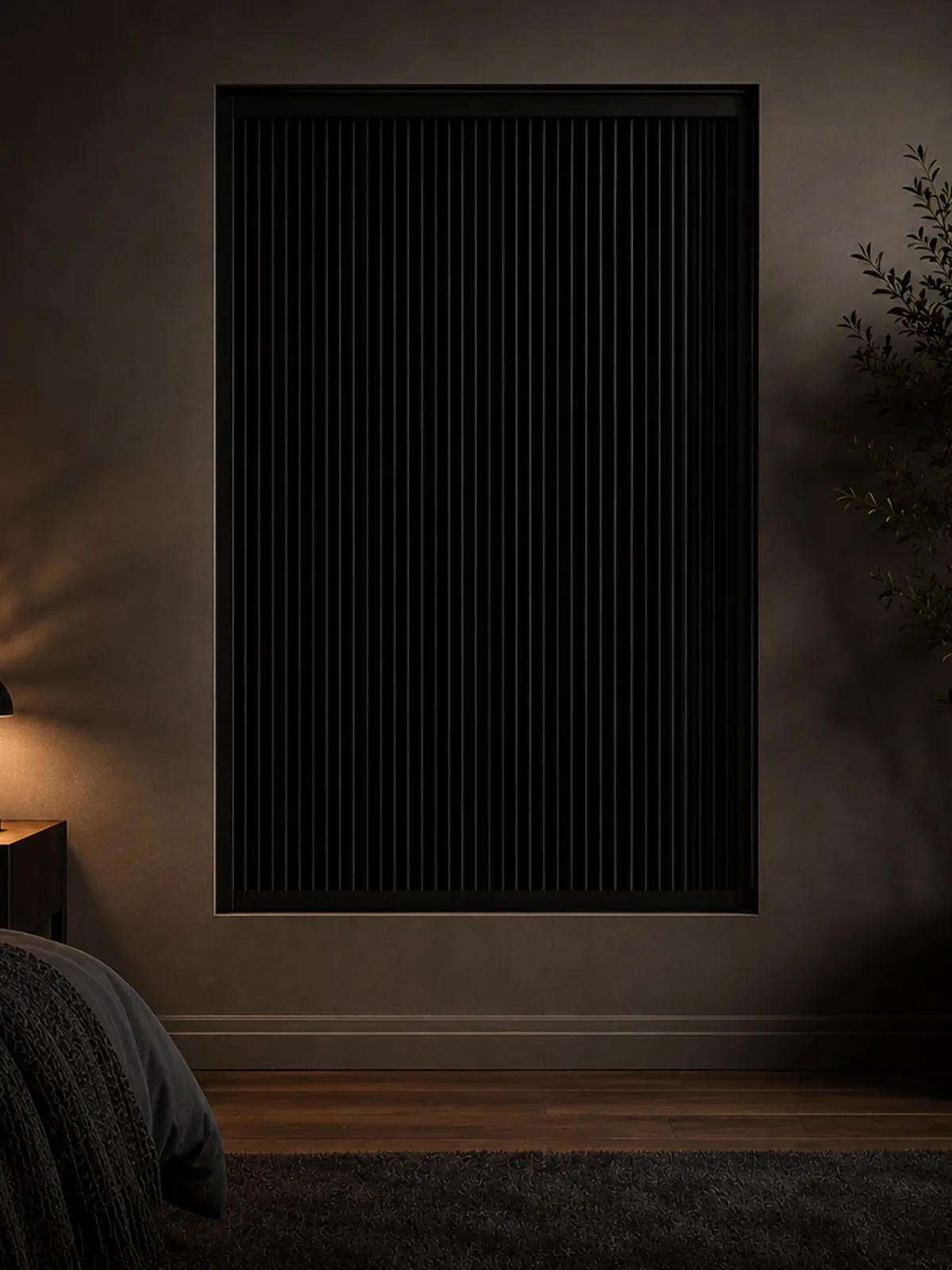
The Blockout Blind mounts a slim aluminium frame around the entire window opening. The blackout fabric runs inside that frame in tensioned side tracks, and the top and bottom seal against it. Every edge is closed — top, both sides and bottom — so there is simply nowhere for light to get in.
- Sealed frame — the fabric edges live inside the tracks; no side gap, no bottom gap.
- Tensioned, cordless — pull the bottom bar and it stays exactly where you leave it. No cords, no chains — child-safe by design.
- Top-down or bottom-up — lower it from the top to let a little light in, or close it fully.
- Inside or outside mount — inside needs about 2.5 cm (1") of recess depth; outside needs about 7.5 cm (3") of flat surface.
- Motorized & smart options — schedule it, control by app or voice.
- Quieter and cooler — the sealed fabric also dampens outside noise and cuts summer heat gain.
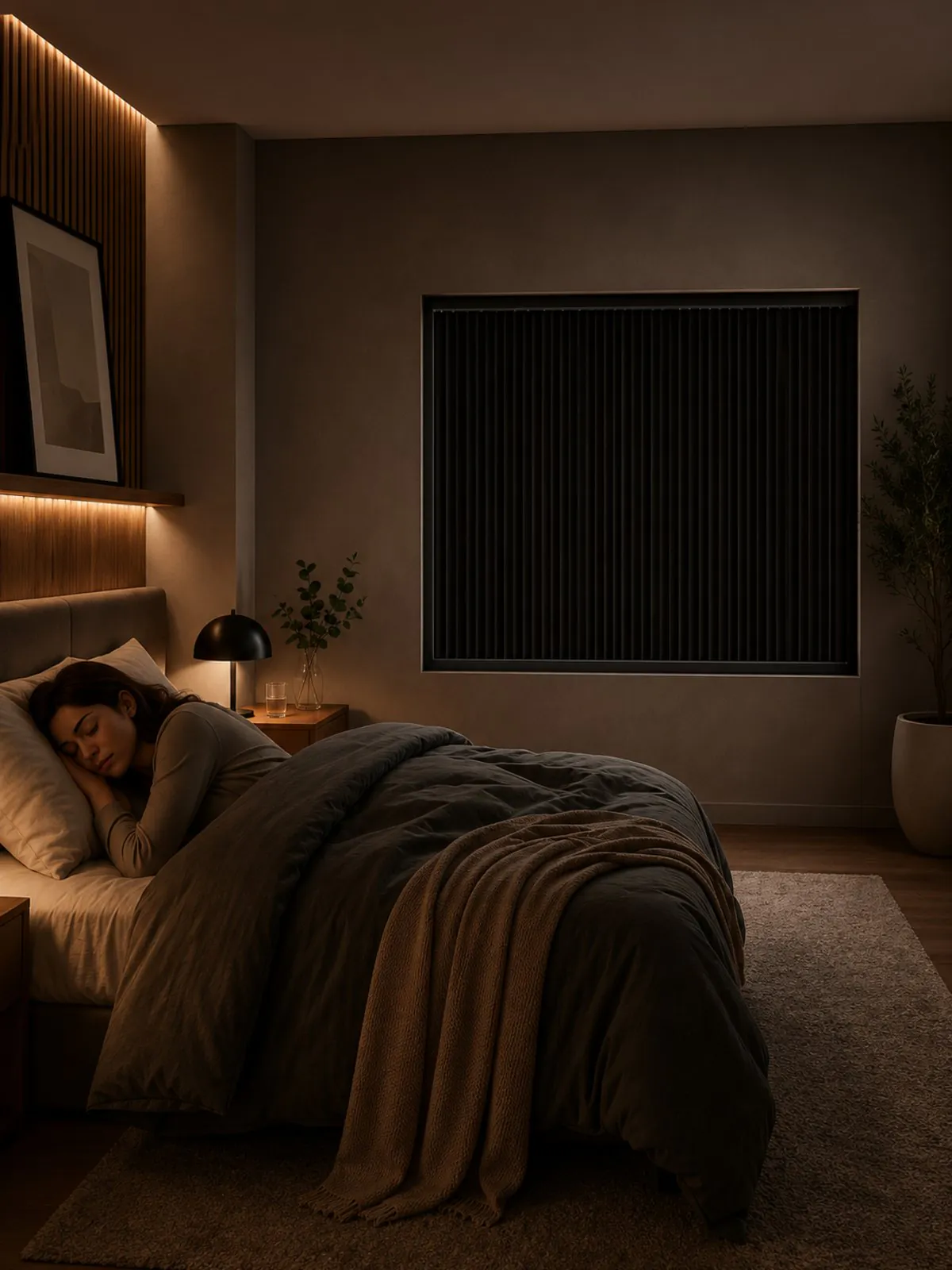
Who it’s for
- Babies and toddlers — naps and early bedtimes in a bright season. See our nursery guide.
- Shift workers and night owls — real sleep at 10 a.m.
- Light sleepers and migraine sufferers.
- Home cinemas and gaming rooms.
- Anyone in a bright condo with streetlights and neighbours’ windows.
Honest pros and cons
Pros
- Truly 100% dark — the frame seals every edge; no halo, no bars of light.
- Cordless and child-safe — a tensioned bar, nothing hanging.
- Top-down / bottom-up flexibility.
- Quieter, cooler room as a side effect of the seal.
- Motorized and smart-home ready.
- Made to measure for each window.
Cons
- The frame is visible — slim and neat, but you see it around the window. Choose the finish to match your trim.
- Costs more than a plain blackout roller — you’re paying for the frame and the seal, which is exactly what delivers the darkness.
- Needs some depth or flat surface to mount the frame — we check at the consultation.
- Total darkness isn’t for living rooms — there, use a dim-out roller or zebra blind.
At a glance
| Darkness | 100% — sealed frame |
|---|---|
| Privacy | Absolute |
| Insulation | Good; sealed edges help |
| Noise | Noticeably quieter |
| Style | Clean; frame visible |
| Best rooms | Bedrooms, nurseries, home cinemas, shift-worker rooms, bright condos |
| Options | Inside / outside mount · top-down/bottom-up · cordless · motorized · frame finishes |
You can get close to full darkness by adding side channels to a blackout roller — we do it often. The Blockout Blind is the purpose-built version: the frame is the channel system, top and bottom included, in one clean unit. If darkness is the whole point of the room, this is the one.
When to choose something else
- Want darkness and maximum insulation on a cold window? A blackout honeycomb with channels.
- Prefer a soft, decorative look? Blackout-lined curtains or a Roman shade (expect a little edge light).
Frequently asked questions
Is the Blockout Blind really 100% blackout?
Yes. Unlike an ordinary blackout blind, the fabric runs inside a frame that seals the top, both sides and the bottom of the window, so there are no edges for light to leak around.
What is the difference between a Blockout Blind and a blackout roller?
A blackout roller uses opaque fabric but hangs with small gaps at the sides where light gets in. A Blockout Blind puts the fabric inside a sealed frame with tensioned side tracks — no gaps.
Is it child-safe?
Yes — it’s cordless. You move a tensioned bottom bar; there are no cords or chains.
Can it be motorized?
Yes, with app, voice and schedule control — a lovely combination for a bedroom that opens gently at your wake time.
Does it fit my window?
Inside mount needs about 2.5 cm of recess depth; outside mount needs about 7.5 cm of flat surface around the window. We confirm at your free consultation.
Do you install it?
Yes — measured, made to size and installed free across Quebec and Ontario.