Why a skylight can’t take an ordinary blind
Every blind you have ever owned relies on gravity to hang straight. Turn that window horizontal — or set it on a 30° roof pitch — and the fabric simply sags away from the glass. Within a season you have a drooping belly of fabric, daylight pouring around all four edges, and a shade that no longer does the one job you bought it for.
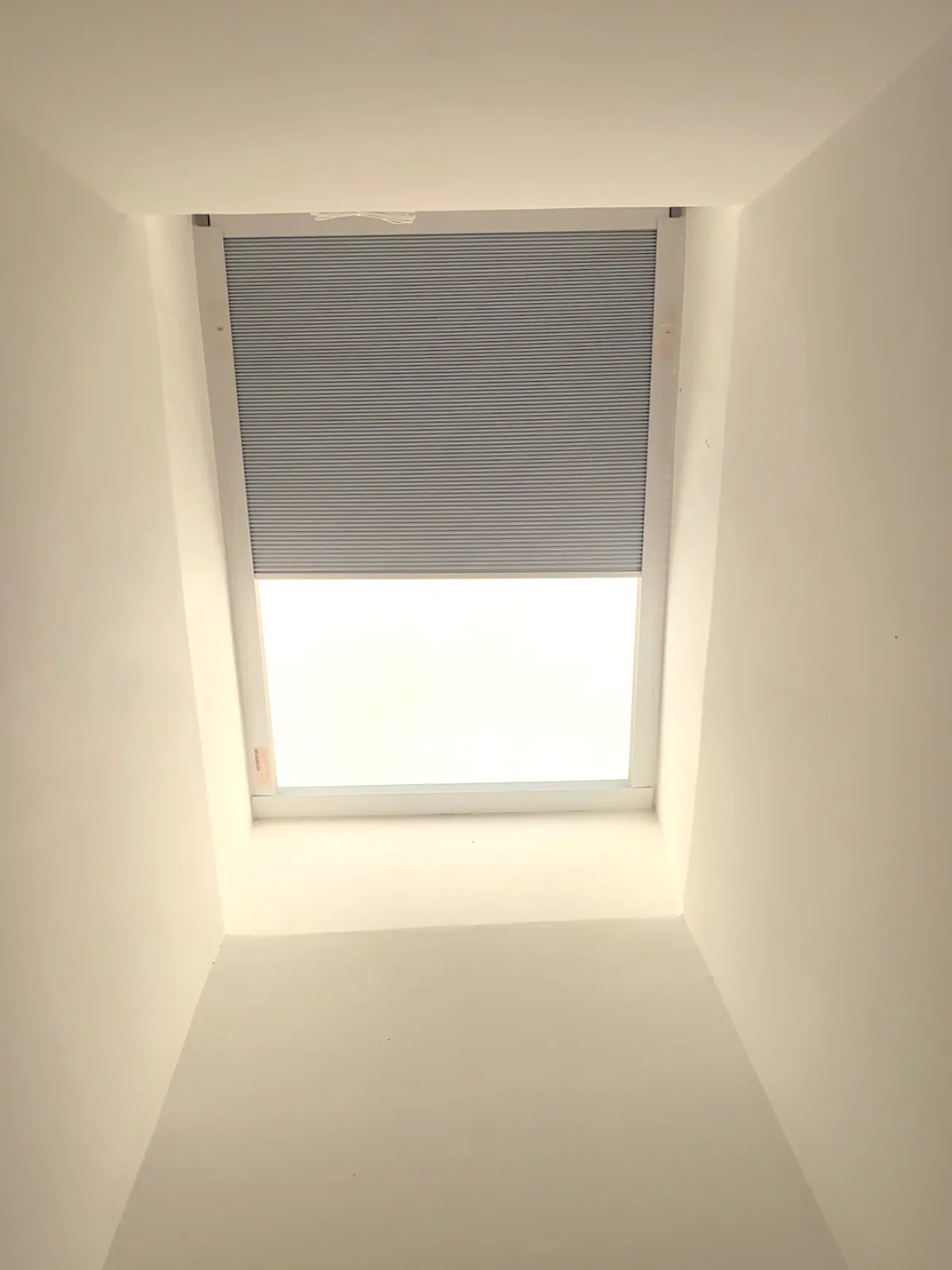
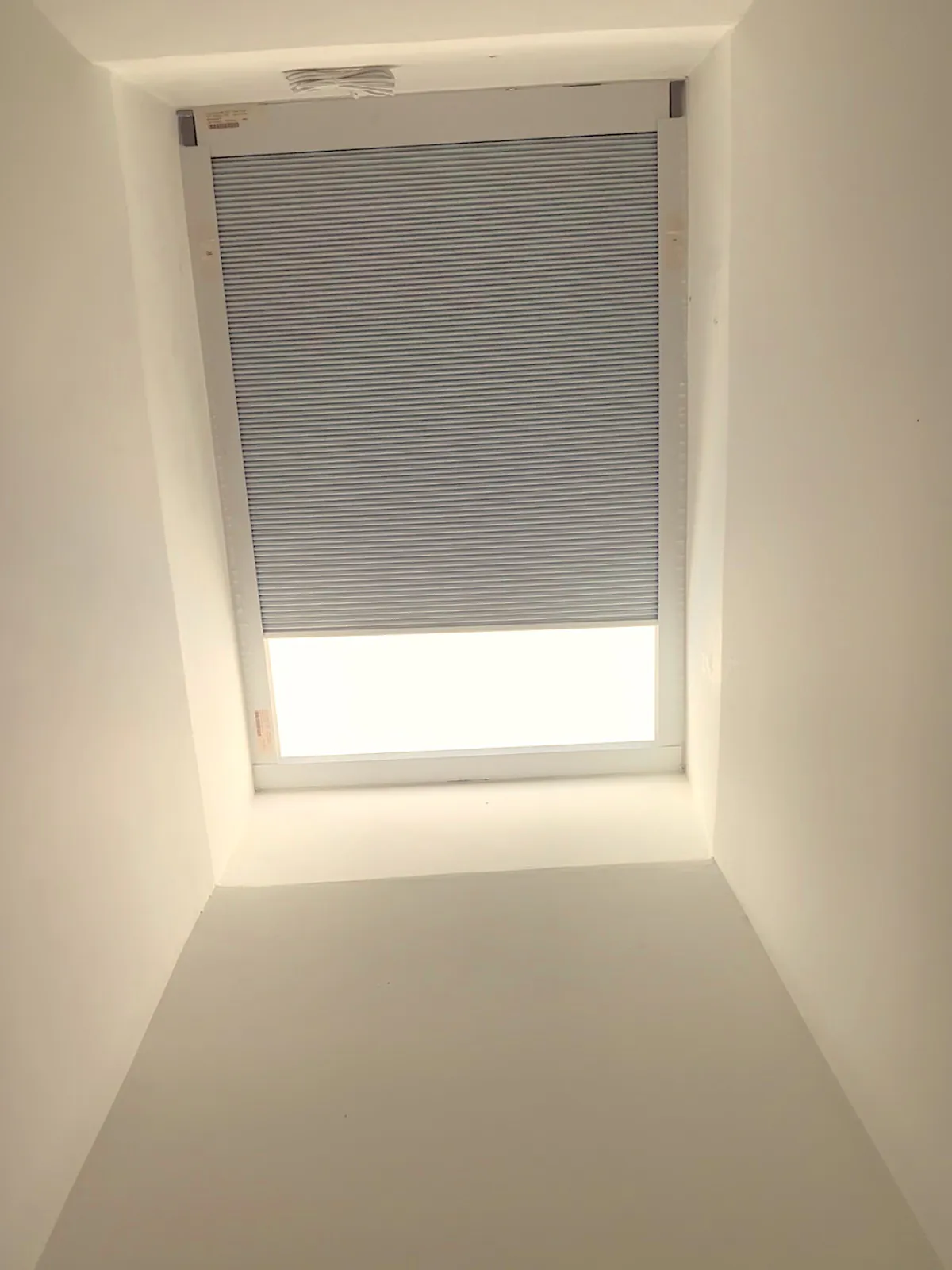
A skylight shade solves this with an aluminium frame and side channels. The fabric’s edges run inside those channels, so it stays flat and under light tension no matter what angle the glass sits at. That is also what kills the light leak: the fabric is held right out to the frame instead of dangling near it.
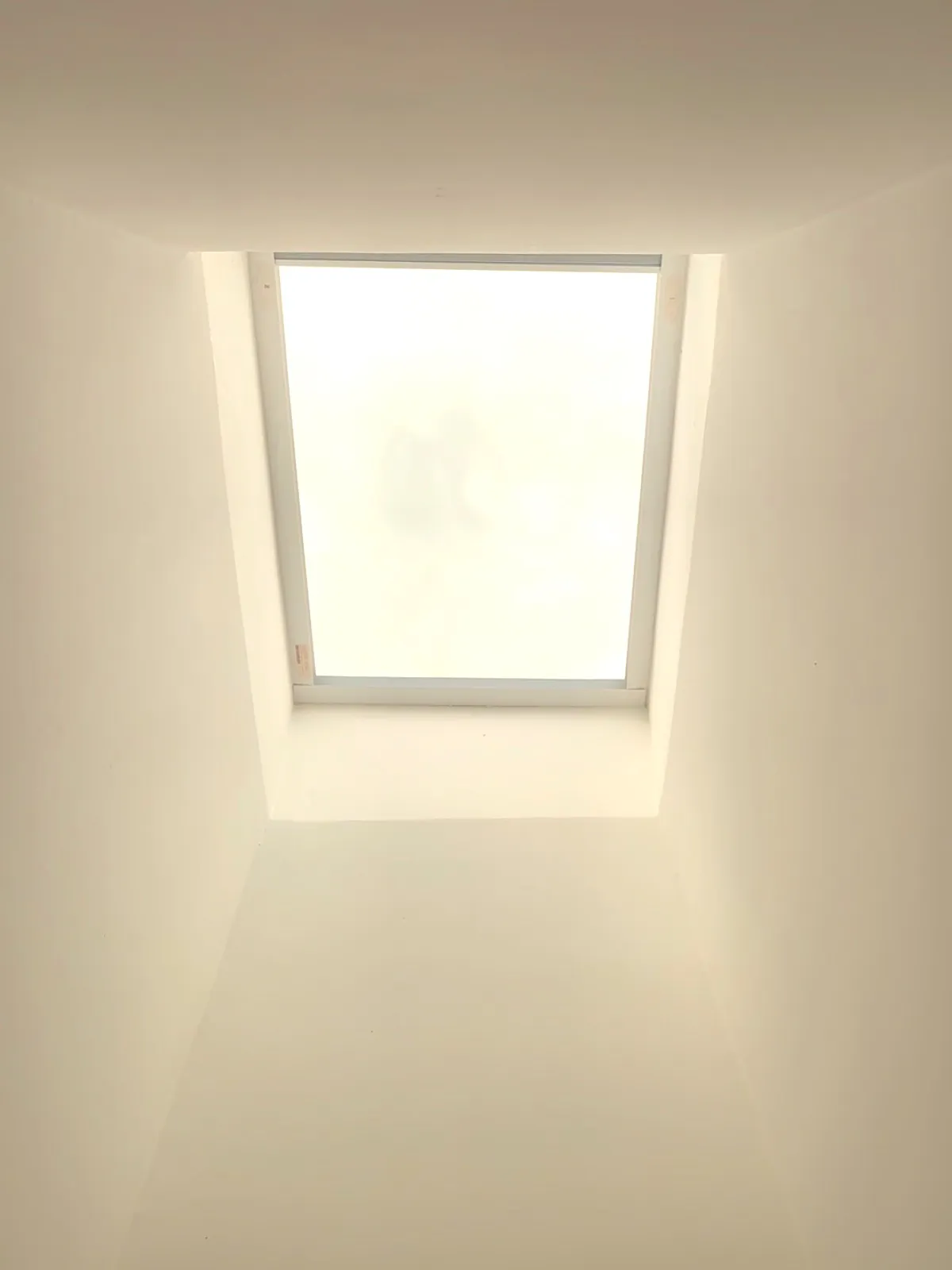
Why they’re almost always cellular
Skylight shades are nearly always made from honeycomb (cellular) fabric, and for once that is engineering rather than fashion. A skylight is the worst-insulated surface in the building: it is glass, it faces straight up at the sky, and heat pours through it in both directions. Cellular fabric traps air in its pockets and puts an insulating layer between the room and the glass — the same trick as a honeycomb blind, but where it matters most.
In practice that means a room that stops overheating in July, and stops bleeding heat on a January night. If you have ever stood under a skylight in a Montreal winter and felt the cold falling off it, that is exactly what the cells stop.
Light filtering or blackout
- Light filtering — knocks back the glare and the heat but keeps a soft, even glow. The usual choice for a kitchen, hallway, stairwell or living room.
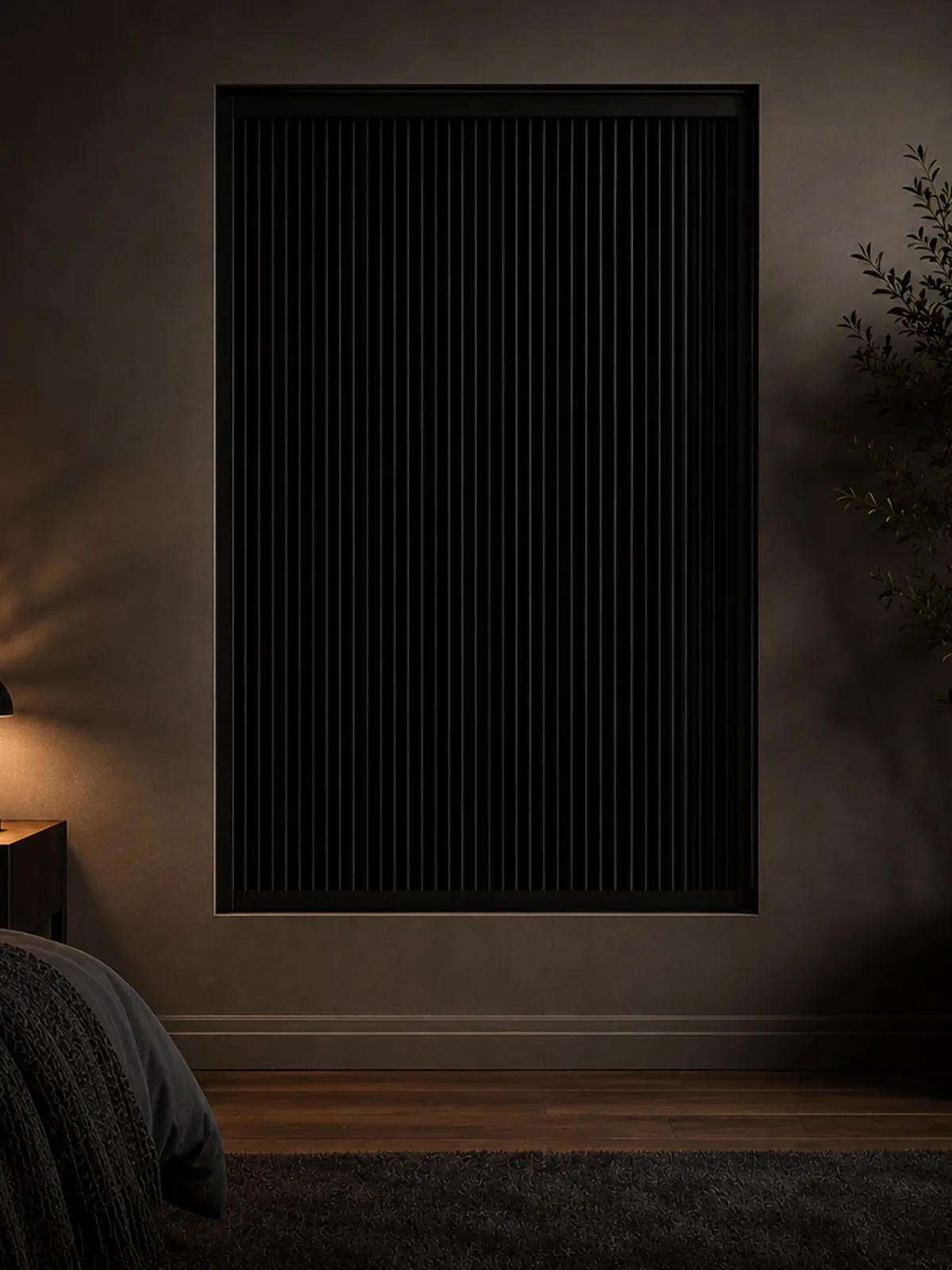
- Blackout — an opaque liner inside the cells. In a bedroom under a skylight this is what buys you sleep past sunrise. Combined with the side channels, the darkness is genuine rather than approximate.
Motorized isn’t a luxury here
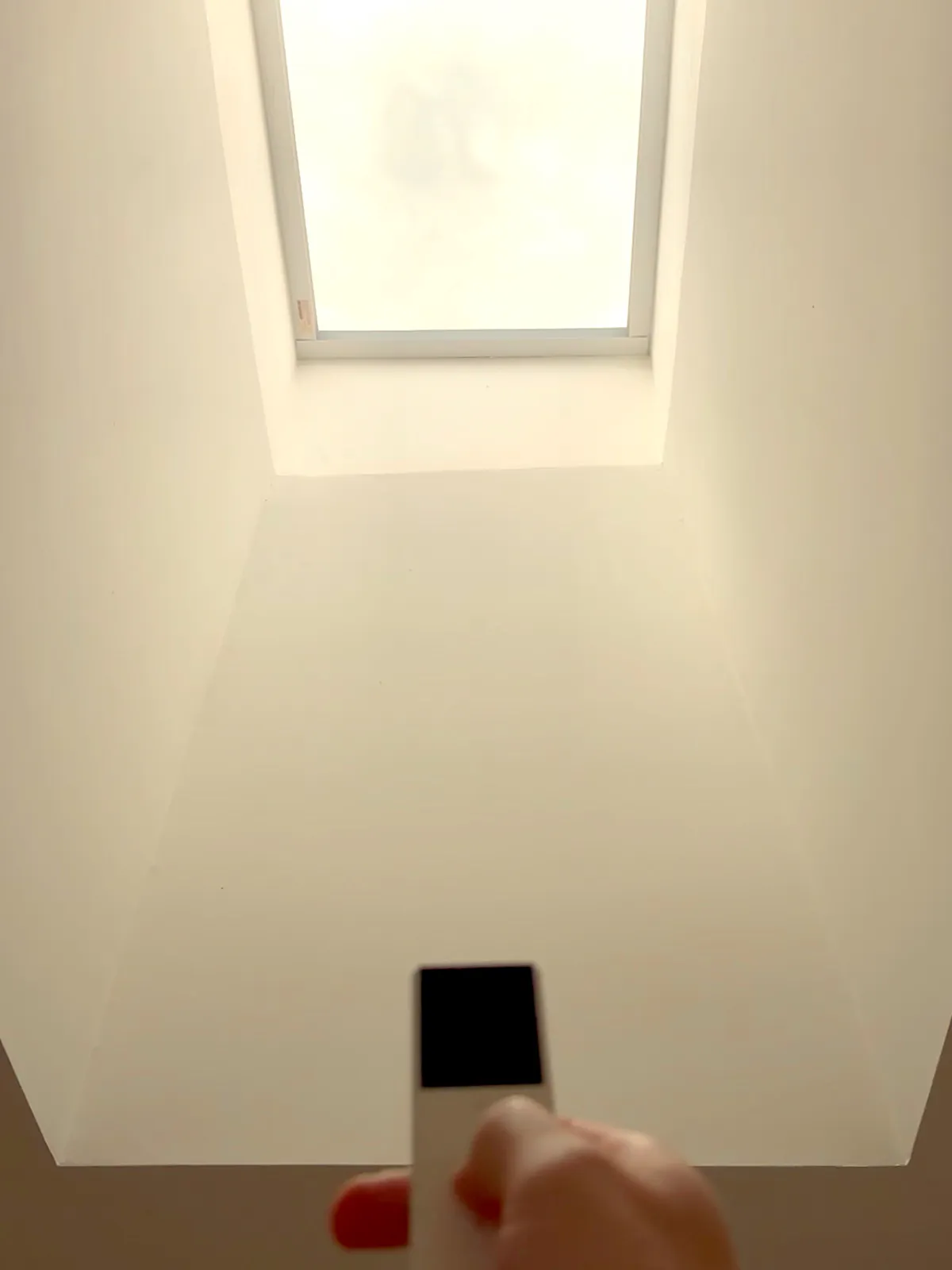
On a normal window, motorization is a nice upgrade. On a skylight it is the whole point — the shade is three or four metres above your head, often over a stairwell. Manual poles exist and we will fit one, but nobody enjoys using them, and a shade that is annoying to operate ends up never being moved.
Skylight motors are typically rechargeable lithium-ion units: no wiring through a finished ceiling, and up to 10 months of use per charge, so topping it up is a once-a-year job rather than a chore. The motor and controls carry a 3-year warranty. Where the skylight catches good sun, a small solar panel on the frame tops the battery up and you can forget about it entirely. Control is by remote, and on most systems by phone or voice as well — useful for scheduling the shade to close before the afternoon sun swings round.
Honest pros and cons
Pros
- Stops the summer overheating — the single biggest complaint about skylights.
- Real insulation in winter, where the building loses the most heat.
- Genuine blackout is possible, because the channels seal the edges.
- Fits angled, flat or vertical skylights — the frame is made to the pitch.
- No sagging, ever, unlike an ordinary blind turned on its side.
- Cordless and out of reach — nothing hanging for children or pets.
- Schedulable — close it before the sun comes round, not after the room is already hot.
- Up to 10 months per charge and a 3-year warranty on the motor.
Cons
- Costs more than a standard blind of the same size — you are paying for the frame, the channels and the motor.
- Needs exact measurement of the glass and the pitch; this is not a DIY-friendly product.
- The battery does need recharging — roughly once a year, or never if you add the solar panel.
- Deep light wells (a long shaft between ceiling and glass) need the shade at the glass, which means working at height.
- Fewer fabric choices than a normal window — the range is built around cellular.
At a glance
| Heat control | Best-in-class overhead |
|---|---|
| Insulation | Cellular, where it matters most |
| Blackout | True, with side channels |
| Ease of use | Motorized — remote or app |
| Maintenance | Dust occasionally; recharge or solar |
| Battery | Rechargeable lithium-ion — up to 10 months a charge |
| Warranty | 3 years on motor and controls |
| Best rooms | Bedrooms and lofts under a skylight, stairwells, kitchens, bathrooms, home offices |
| Options | Light-filtering / blackout · battery or solar · remote, app or voice · angled, flat or vertical glass |
Who they’re perfect for
If there is a bedroom under your skylight, this is not optional. A skylight over a bed means direct sun from first light in June, and a room that holds heat well into the night. Blackout cellular with side channels is the difference between a room you sleep in and a room you avoid in summer.
They are equally the answer for a loft conversion, a stairwell that turns into a heat chimney, or a top-floor home office that becomes unusable by mid-afternoon.
Our climate hits skylights from both directions: a humid 32 °C July afternoon, then −25 °C in February. Glass overhead is the least insulated part of the building envelope in either case. A cellular skylight shade is one of the few upgrades that pays you back in both seasons rather than just one.
What we’ll need to know
Skylight shades are made to the exact opening, so the consultation matters more than usual. We measure the glass, check the pitch, look at how deep the light well is and how we’ll reach it, and confirm whether the frame will take an inside or outside mount. If your skylight is a branded unit (VELUX and similar), the model number stamped on the frame tells us a lot — photograph it before we visit and you’ll save us both time.
Frequently asked questions
Can you put a regular blind on a skylight?
Not successfully. Without side channels the fabric sags away from the glass under its own weight and light spills around every edge. A skylight shade uses an aluminium frame and channels to hold the fabric flat whatever the angle.
Do skylight shades have to be motorized?
Not strictly — manual pole-operated versions exist and we will fit one. But most skylights are well out of reach, and in practice a shade that is awkward to operate stops being used. Motorized is what we recommend and what nearly everyone chooses.
How is it powered? Do you need to wire the ceiling?
Usually not. The standard is a rechargeable lithium-ion motor that gives up to 10 months of use on a single charge and recharges by cable. If the skylight gets decent sun, a small solar panel on the frame keeps it topped up so you never think about it at all.
Is there a warranty?
Yes — 3 years on the motor and controls. The shade itself is made to measure and installed by us, so if anything is not right with the fit, we come back and sort it.
Will it actually make the room cooler?
Yes, noticeably. Overhead glass is the biggest heat gain in most rooms that have it. Cellular fabric puts an insulating air layer between the room and the glass, and closing it before the sun comes round stops the heat before it builds.
Can I get true blackout under a skylight?
Yes — blackout cellular fabric plus the side channels that come with the frame. The channels are what make it genuine rather than approximate, because they stop light leaking down the edges.
Do they work on angled and flat skylights?
Both, plus vertical. The frame is built to your pitch, so an angled roof window, a horizontal ceiling skylight and a vertical gable window are all handled — they are simply made differently.
Do you install them?
Yes — measured, made to your opening and installed free across Montreal, including the awkward ones at the top of a stairwell.