Curtains vs drapes — is there a difference?
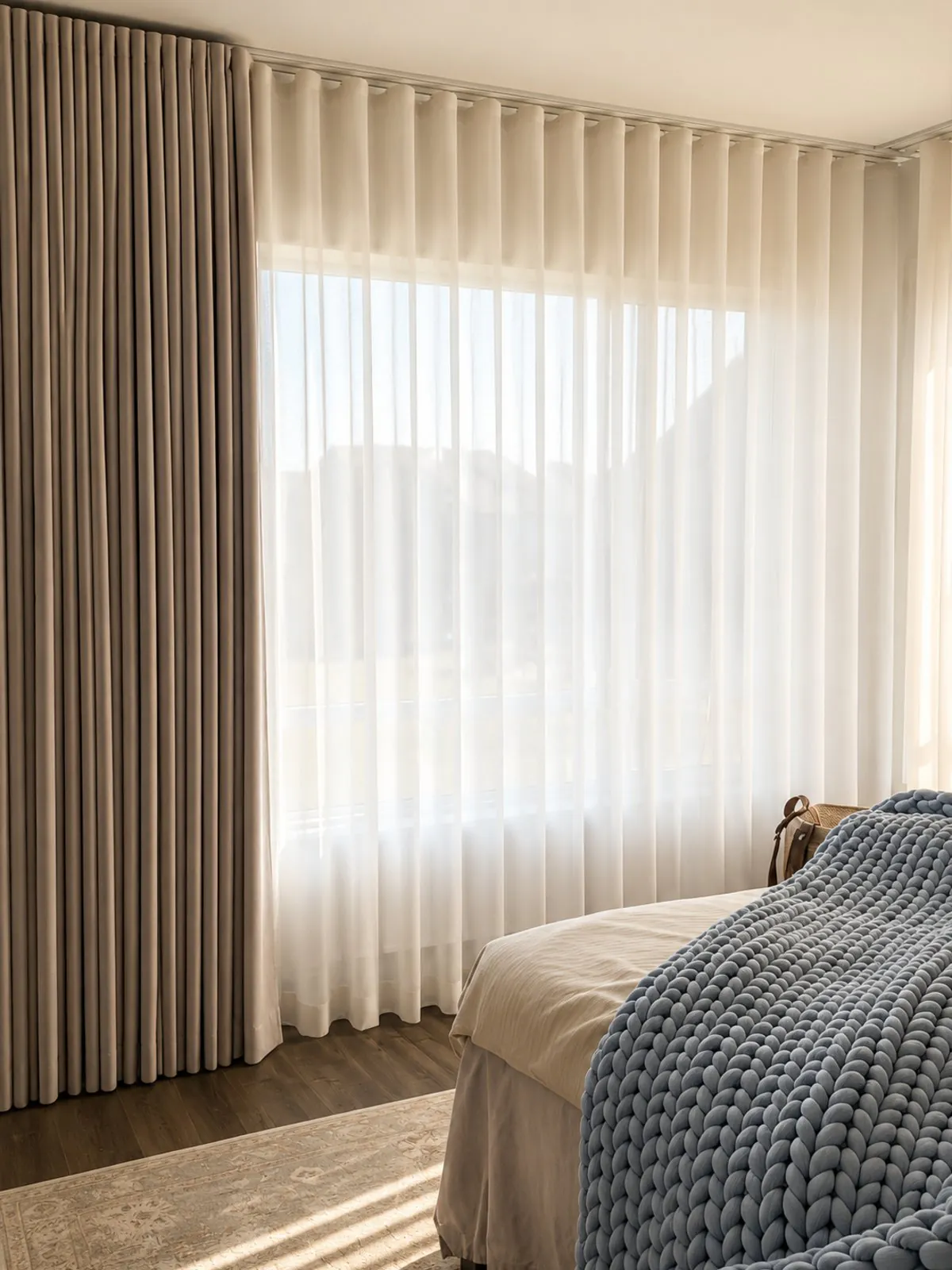
Loosely: curtains are lighter, often unlined; drapes are heavier, lined, more formal. In practice we make both to measure and the choice is really about fabric weight, lining and function. Many rooms use a sheer curtain for daytime with a lined drape over it for evenings — the layered look you see in well-designed homes.
The decisions that matter
1. Fabric & opacity
- Sheer / voile — soft light, daytime privacy, airy feel.
- Linen & linen-look — relaxed, textured, very current.
- Velvet & heavy weaves — luxury, warmth, sound absorption.
- Blackout-lined — bedrooms and media rooms.
2. Lining
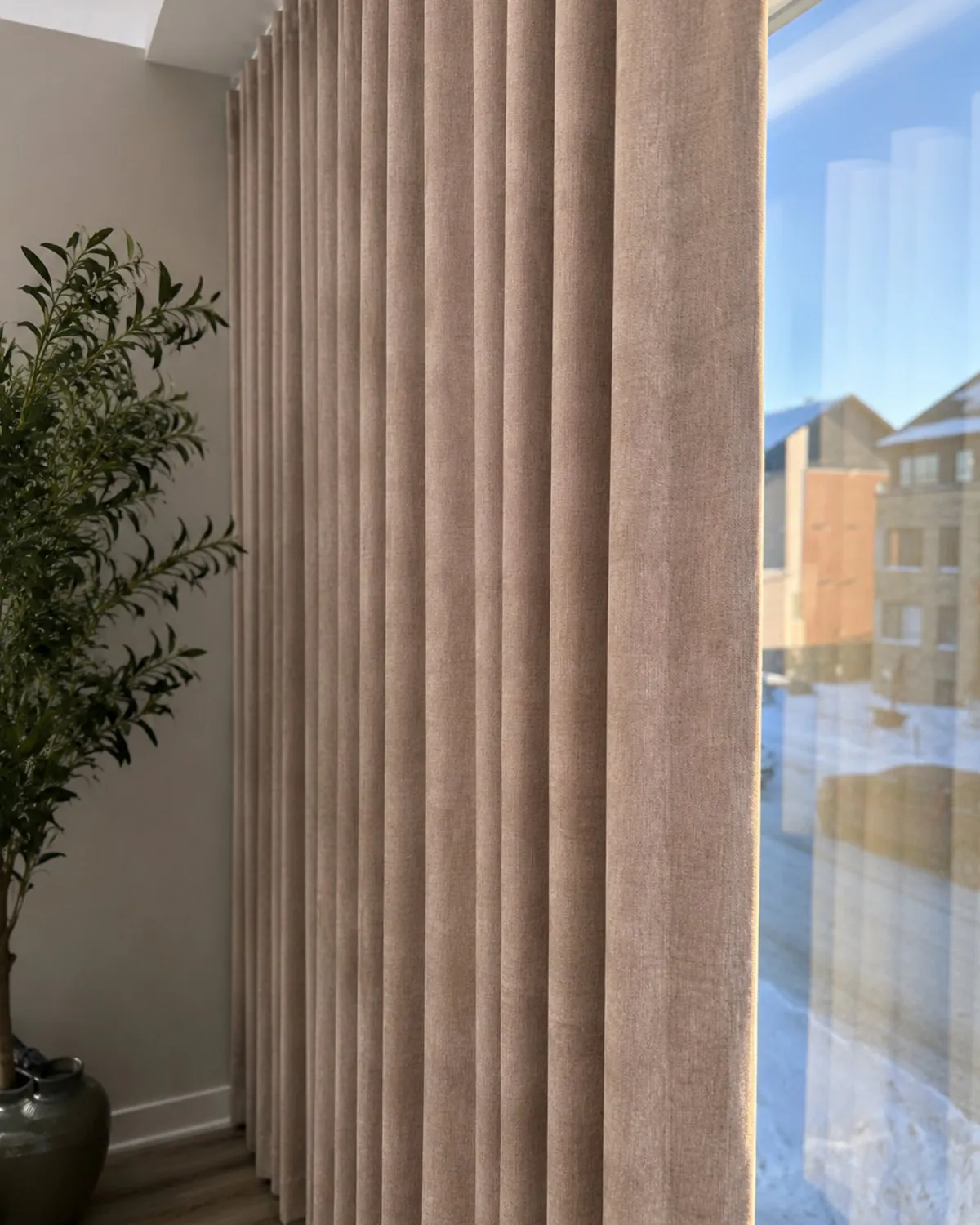
Lining is what separates a curtain that looks good from one that looks expensive. It adds body so the fabric hangs in clean folds, protects the face fabric from sun fade, and — with thermal or blackout lining — adds insulation and darkness.
3. Fullness
Fullness is how much fabric you use versus the width of the window. Skimpy curtains are the most common mistake. We use roughly 2× to 2.5× the track width so the curtains look generous both open and closed.
4. Heading (pleat) style
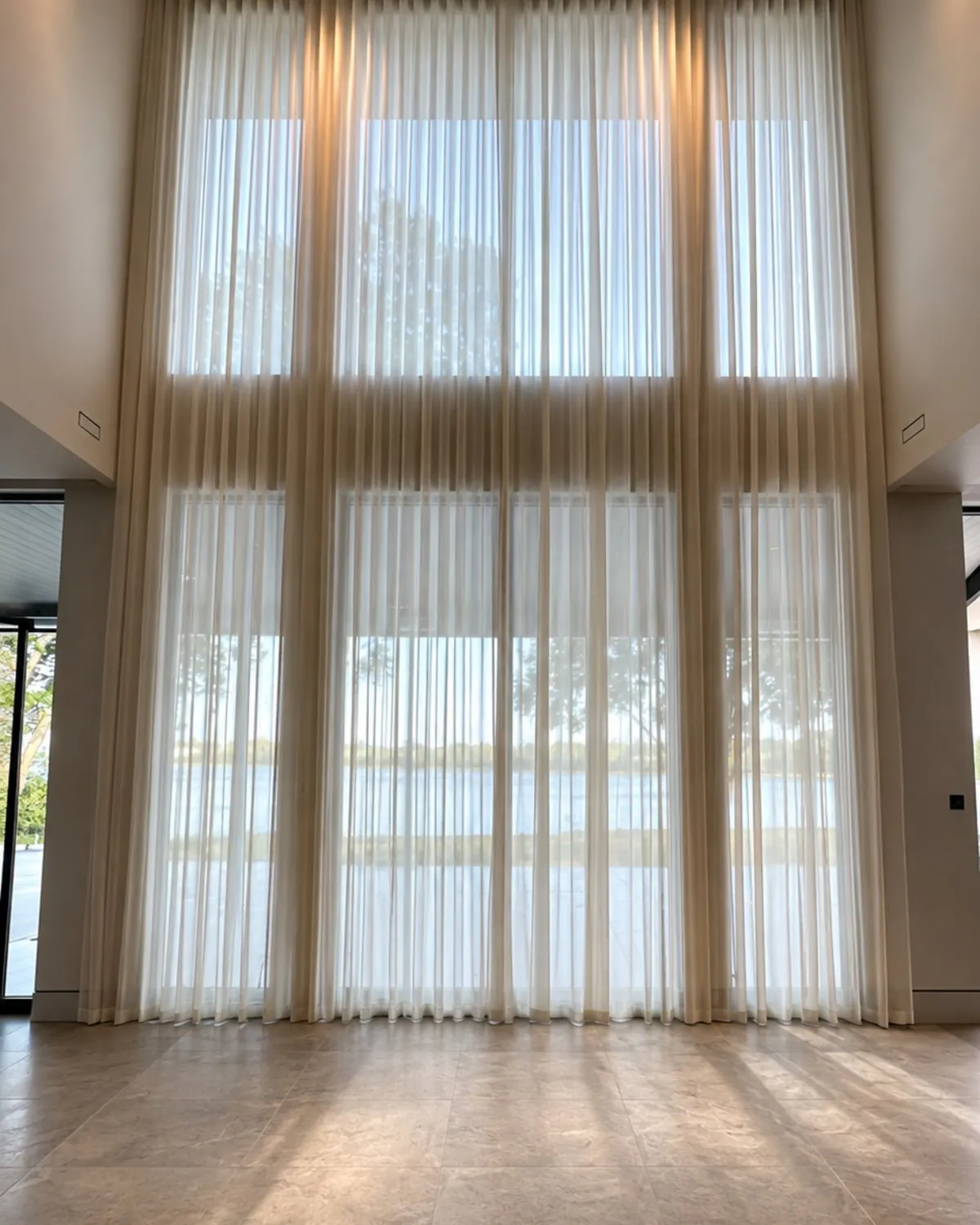
Wave / S-fold — soft, even ripples; the modern favourite on a track. Pinch pleat — tailored, classic. Eyelet / grommet — casual, on a rod. Pencil pleat — traditional and economical.
5. Track vs rod, and mounting height
A ceiling-mounted track gives the cleanest, tallest look and glides silently — our usual recommendation. Mount high and wide: hanging curtains just above the window frame and extending past its sides makes both the window and the room look bigger.
6. The drop (length)
Kiss the floor (about 1 cm above) for a crisp, tailored finish. Break (2–3 cm on the floor) for a relaxed, luxurious look. Puddle for full drama. Never halfway up the wall. Getting this exact is why we measure every window ourselves.
Honest pros and cons
Pros
- Unmatched softness, warmth and drama — transforms the feel of a room.
- Makes ceilings look taller and windows bigger when hung high and wide.
- Excellent insulation and sound absorption when lined.
- Endless fabric, colour and pattern choices.
- Layers beautifully with sheers or blinds.
- Motorized tracks available.
Cons
- Take up wall space when open (the stack) — allow for it.
- Not ideal near water or cooking — kitchens and bathrooms suit blinds better.
- Dust and need periodic cleaning; check the fabric’s care.
- Cost more than a basic roller blind because of the fabric quantity and lining.
- Details are unforgiving — bad measurements show. (We measure for you.)
At a glance
| Insulation | Very good when lined |
|---|---|
| Light control | Sheer to full blackout |
| Privacy | Excellent when closed |
| Style | The statement option |
| Maintenance | Periodic cleaning |
| Best rooms | Living rooms, bedrooms, dining rooms, tall windows |
| Options | Sheer / linen / velvet / blackout · lined · wave / pinch / eyelet · track or rod · motorized |
Who they’re perfect for
If you want the room to feel warm, finished and a little luxurious, curtains are the answer. They’re our first recommendation for living rooms and bedrooms, for tall or feature windows, for patio doors on a ceiling track, and for anyone who finds hard blinds a bit clinical. Layer a sheer under a lined drape and you get soft daylight by day and cosy privacy by night.
Our most-requested combination — and exactly what the photo at the top of this page shows: a sheer wave curtain on a ceiling track for the daytime glow, with a lined blackout drape in front for evenings. Or a honeycomb blind behind for insulation. Best of both, and it photographs beautifully.
When to choose something else
- Kitchen, bathroom or a window right by the sink? A wipe-clean roller blind.
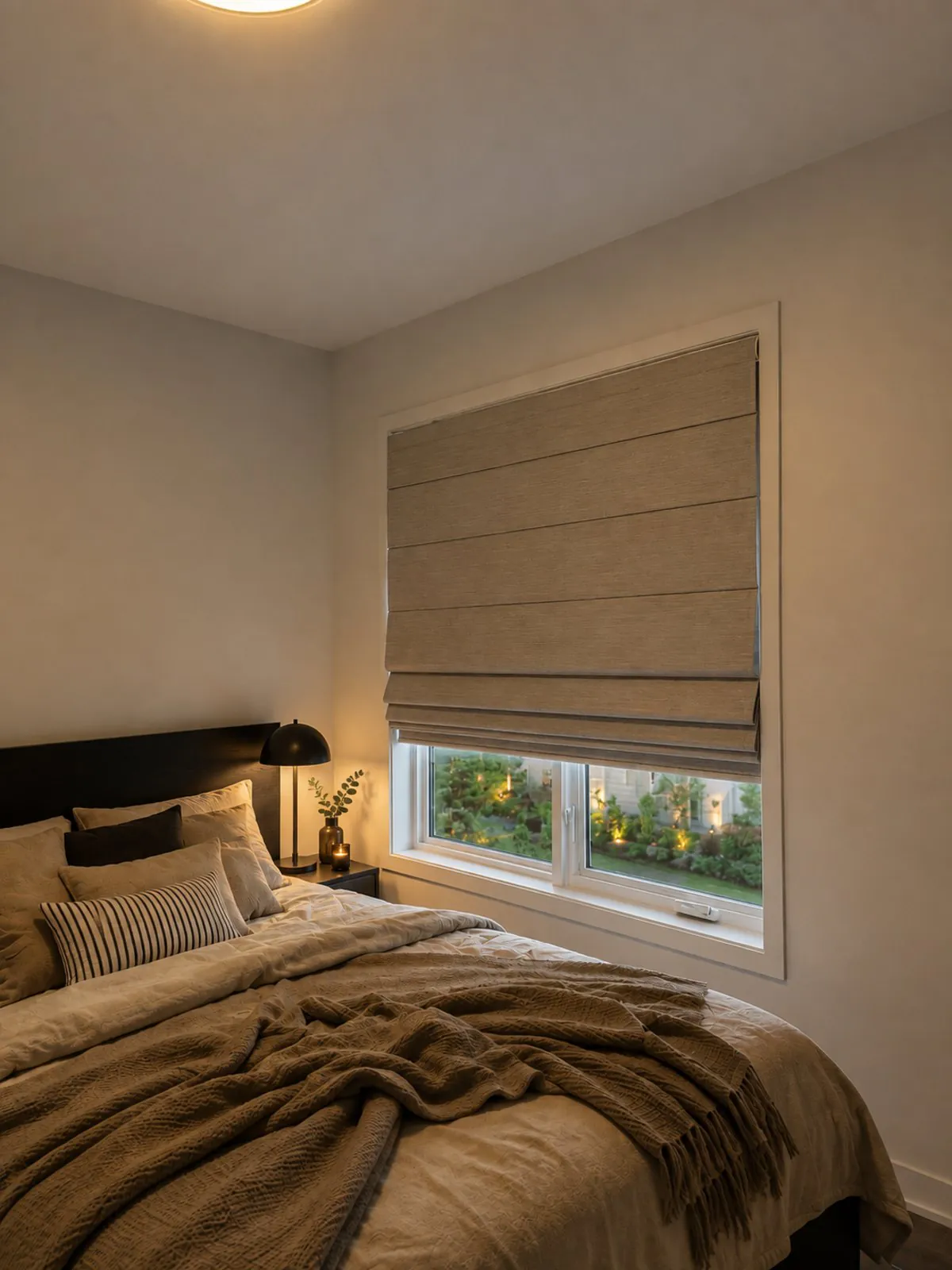
- Tight on wall space, or want a tailored fold instead of a drape? Roman shades.
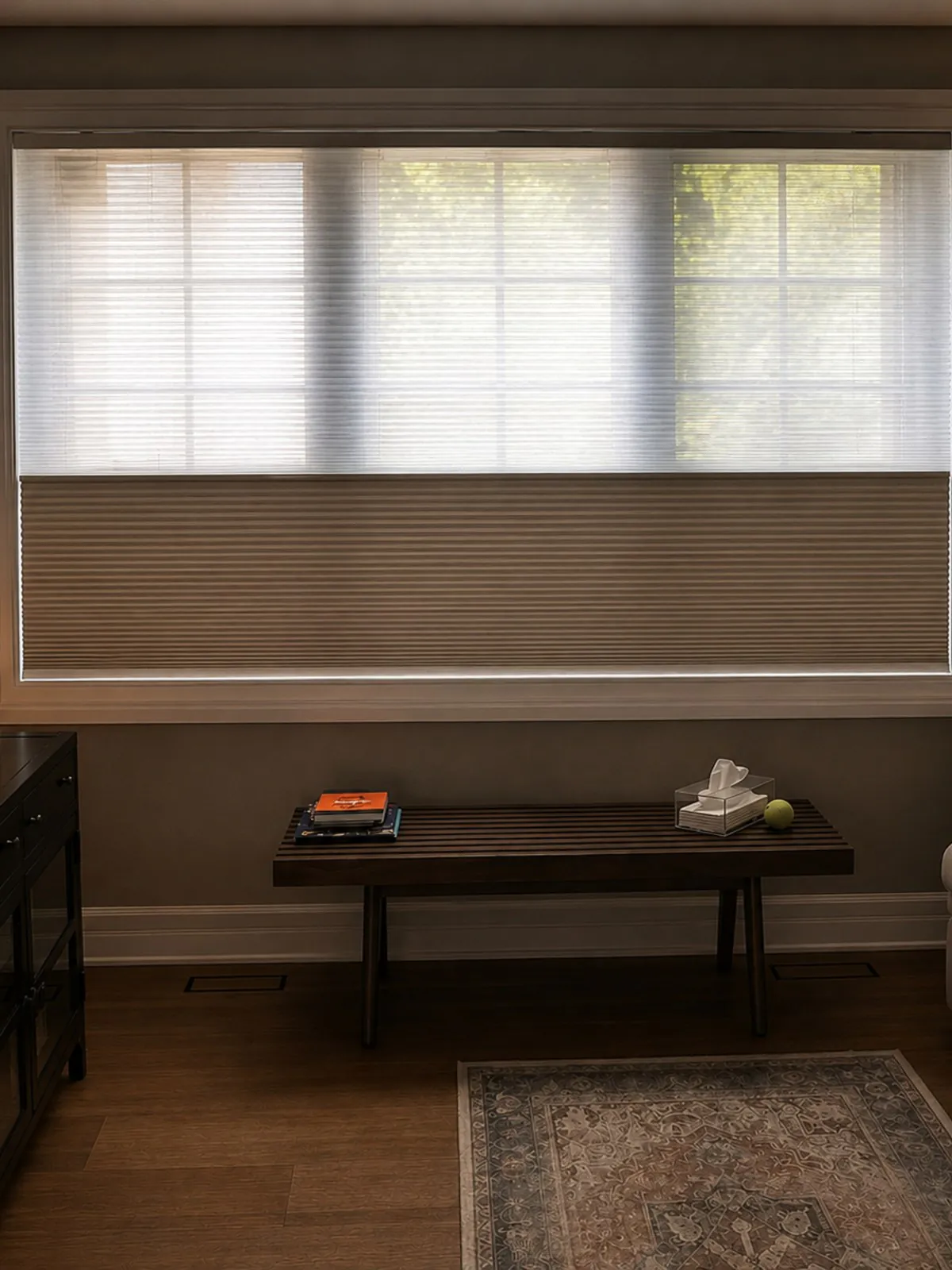
- Need insulation without the fabric volume? Honeycomb blinds.
Frequently asked questions
How high should curtains be hung?
As high as you can — ideally from the ceiling or just below it, and extending 15–25 cm past each side of the window. It makes the window and room look bigger.
Should curtains touch the floor?
Yes, or nearly. ‘Kiss’ the floor (about 1 cm above) for tailored, or ‘break’ 2–3 cm onto it for a relaxed, luxe look. Curtains ending mid-wall look unfinished.
What is fullness?
The ratio of fabric width to track width. We use around 2× to 2.5× so curtains look generous. Skimpy curtains are the number-one mistake.
Are curtains good for insulation?
Lined curtains — especially thermal or blackout-lined — insulate very well and also absorb sound. For the best insulation of all, combine with a honeycomb blind.
Do you make and install them?
Yes — every curtain is made to measure for your window and installed free across Quebec and Ontario, tracks and all.