The one rule that decides everything
Sunlight that hits a covering outside the glass is reflected and re-radiated to the outdoors. Sunlight that hits a covering inside the glass has already passed through the window, and most of the energy it carries is now in your room — the interior blind absorbs it and warms up, and that warm blind heats the air next to it.
Interior blinds still help, and a good one helps a lot. But nothing inside can compete with something outside. That single fact orders the whole list.
Ranked, by how much heat each option actually stops
1. Exterior shades — the only option in a different league
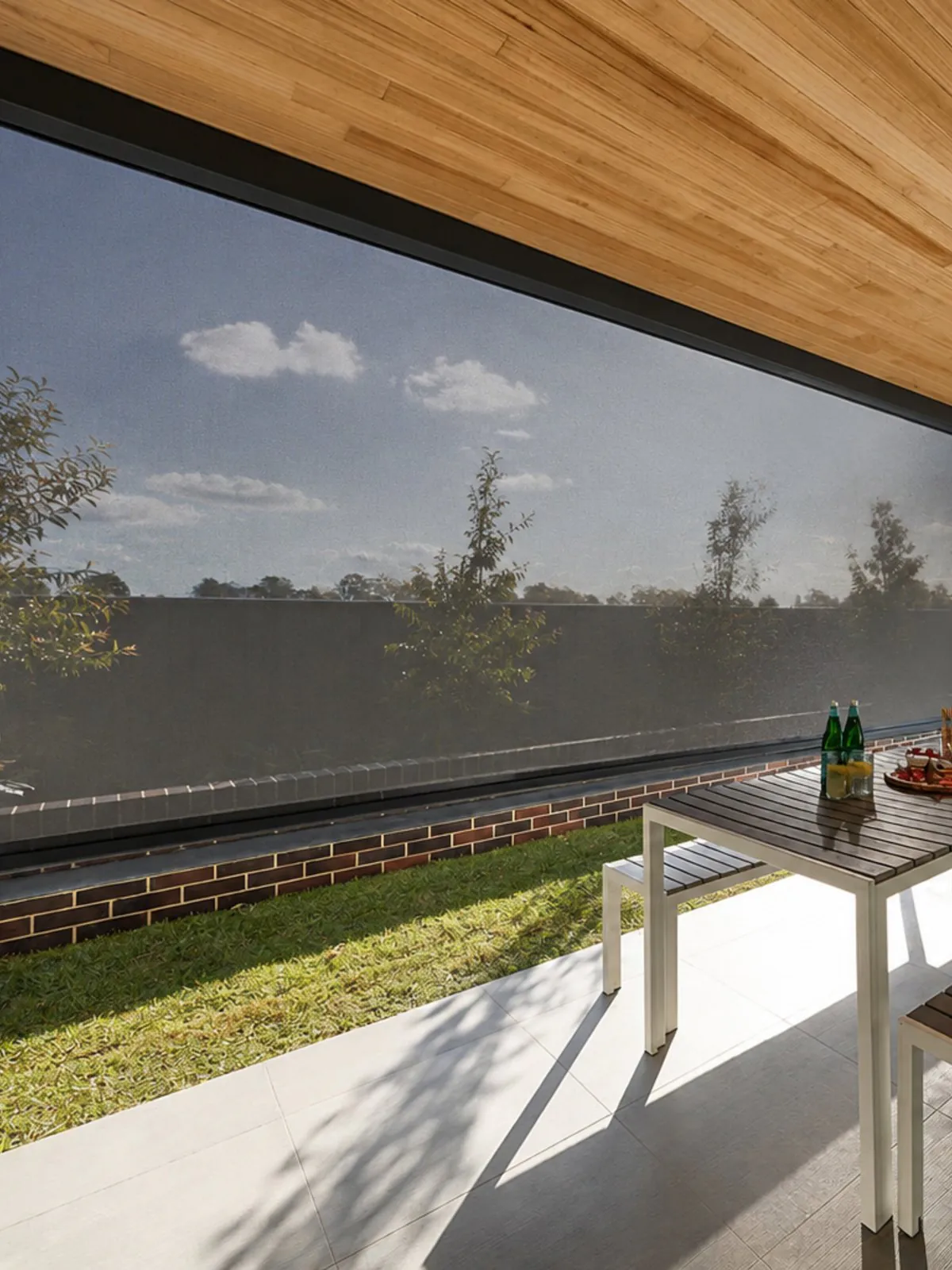
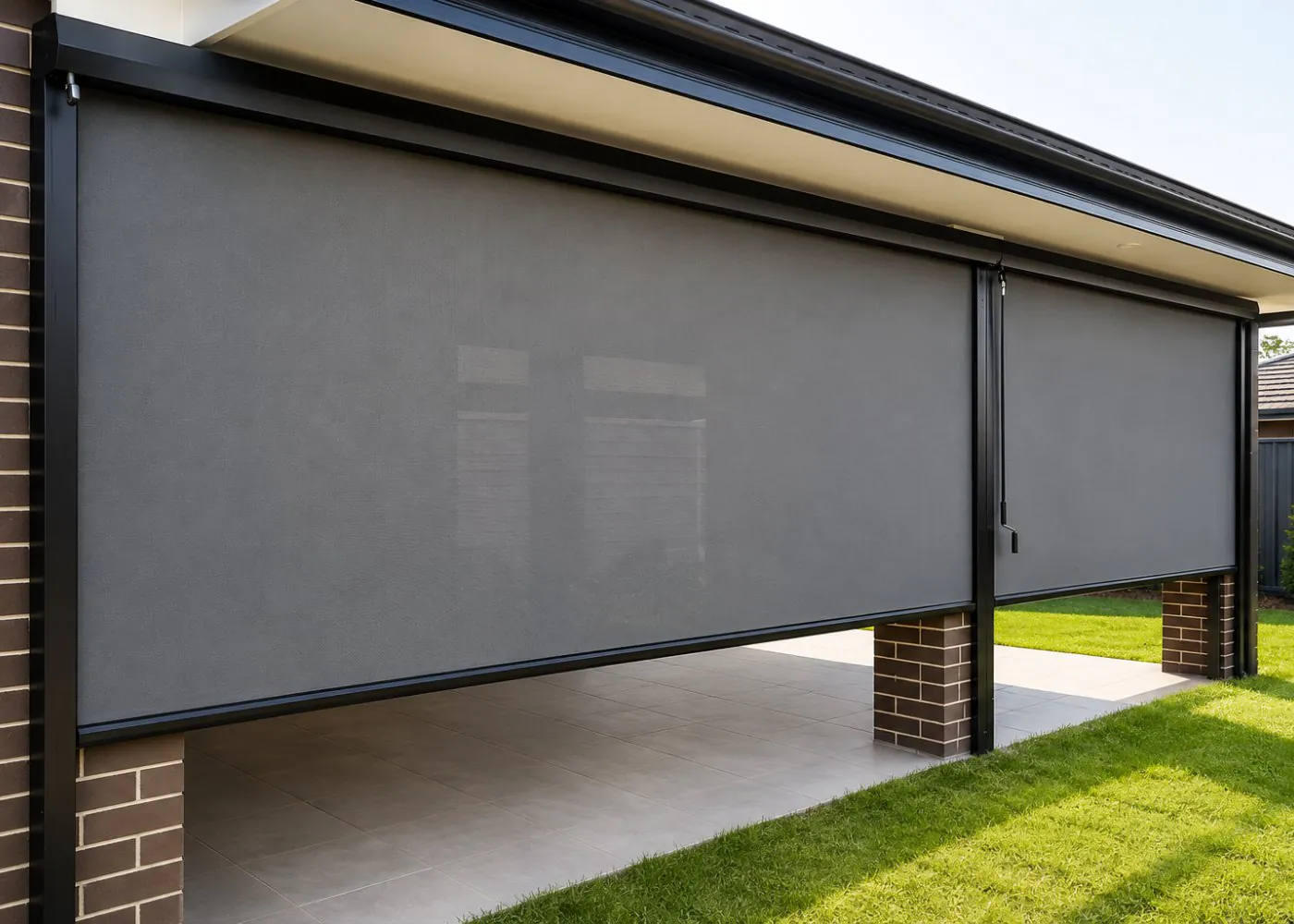
Zip-track exterior screens intercept the sun before it reaches the glass. On a balcony, a patio, or a west-facing wall of windows, nothing else comes close. They also cut glare completely while keeping an outward view through the mesh.
The catches are real: they cost more, they need a mounting surface, and in a condo they almost always need syndicate approval because they change the look of the facade. Worth asking anyway — for a west-facing top-floor unit, the difference in August is not subtle.
2. Solar screen roller fabrics — the best inside option for a view
Solar screens are tightly woven mesh fabrics rated by openness factor — the percentage of the fabric that is actually holes:
- 1–3% openness — maximum heat and glare control, view becomes hazy. Good for screens and hot west rooms.
- 5% openness — the usual compromise. Real glare control, view still readable.
- 10% openness — view stays crisp, heat control is modest. Good for a north or east window that only has a glare problem.
Colour matters as much as openness, and counter-intuitively: a dark fabric gives a better view out and less glare; a light or reflective one rejects more heat. Dual-sided fabrics — light and reflective facing out, dark facing in — are the way to have both, and they’re what we usually recommend on a hot window with a view worth keeping. The fabric options in general are covered in our roller blind guide.
3. Cellular shades — best when heat matters more than view
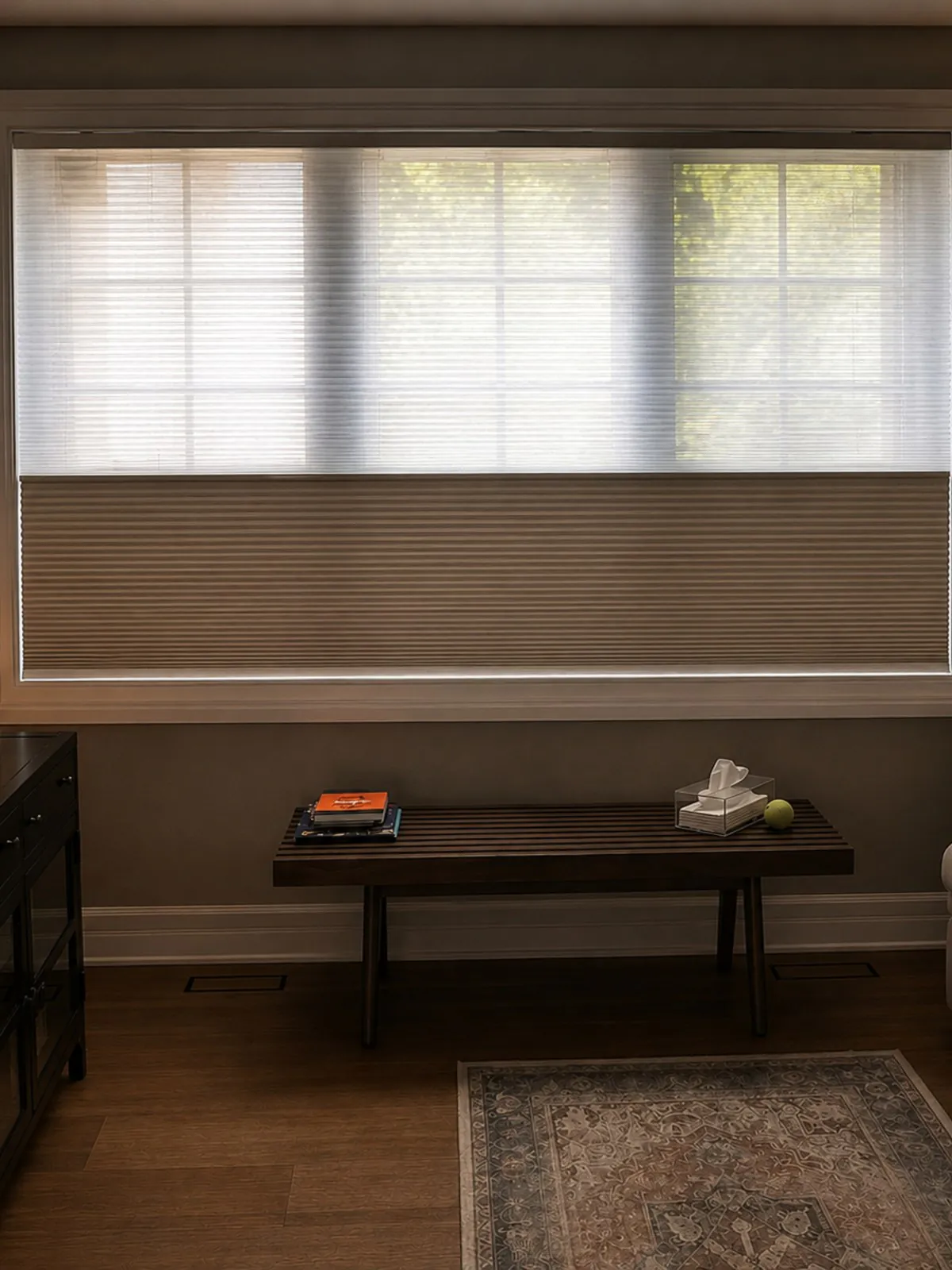
Honeycomb shades trap still air against the glass, which works against summer heat gain as well as winter heat loss. DOE field studies have found whole-home summer cooling savings of 15–25% from well-operated high-efficiency shades. The trade-off is obvious: when they’re down, you don’t have a view. That makes them ideal for a bedroom or a home office that bakes, less ideal for the room with the good window.
4. Reflective-backed blackout and dual shades
A white or metallised backing on a blackout fabric bounces a useful share of the energy back out. A zebra blind gives you a middle setting for the shoulder hours and a closed setting for the worst of the afternoon — a good fit for a living room that’s only unbearable from 3pm to 7pm.
5. Interior film and curtains
Smart film solves privacy on demand rather than heat, so treat it as a different tool. Heavy lined curtains do reduce heat once closed, and are the cheapest way to make a room survivable — but they close off the window entirely.
At a glance
| Heat stopped outside the glass | Exterior zip-track screens |
|---|---|
| Heat stopped inside the glass | Solar screen or cellular |
| Keeps the view | Solar screen, 5–10% openness |
| Best for glare on screens | Solar screen, 1–5% openness |
| Best for a bedroom that bakes | Blackout cellular, side channels |
| Best for UV fading | Any solar screen or lined fabric |
| Openness factor | 1–3% max control · 5% balanced · 10% view-first |
| Colour rule | Dark = better view, less glare · Light = more heat rejected |
Glare on screens is a separate problem
If you work from home facing a bright window, you don’t need darkness — you need the light diffused. A 5% solar screen or a zebra blind takes the hard edge off without turning the lights on at 2pm. Full blackout in a home office is a mistake people make once.
Fading is slower, and permanent
UV and visible light both fade textiles and wood. A south or west window will visibly lighten a hardwood floor, a rug or a sofa arm over a few years — usually in a hard-edged shape that matches the window, which is what makes it so hard to ignore once you notice.
Any solar screen fabric or lined drape cuts a large share of the UV. The practical move is not to cover the window permanently but to cover it when nobody is in the room — the middle of a working day is both the hottest and the least-used part of the day for most homes. That’s an automation, and it’s the most convincing argument for motorizing a sunny window.
Set sun-position triggers rather than fixed times. In Montreal the sun sets after 8:30pm in June and before 4:30pm in December — a 4pm schedule that’s perfect in July is absurd by November.
Our picks by room
- West-facing living room with a view: dual-sided 5% solar screen roller, motorized on a sun trigger.
- South-facing bedroom: blackout cellular with side channels — heat by day, darkness at night.
- Home office: 5% solar screen or zebra. Never full blackout.
- Balcony or patio: exterior zip-track screens, if the building allows them.
- Condo with facade rules: interior solar screen with a white outward-facing backing — the syndicate sees uniform white, you get the performance. More on this in blinds for condos and apartments.
- Sun-room or top-floor space: exterior first, cellular second, and be realistic — a glass room in August needs shade and air movement.
Frequently asked questions
What blinds are best for a south-facing window?
For heat: an exterior screen if you can fit one, otherwise a solar screen roller with a reflective backing or a cellular shade. For a bedroom, blackout cellular with side channels handles heat by day and darkness at night.
Do blinds actually reduce heat from the sun?
Yes, though less than people assume, because anything inside the glass is stopping heat that has already entered the room. DOE field studies have measured 15–25% whole-home summer cooling savings from well-operated high-efficiency shades. Exterior shades do substantially more.
What openness factor should I choose?
1–3% for maximum heat and glare control with a hazy view, 5% as the everyday compromise, 10% when you mainly want to keep the view and only have a mild glare problem.
Should the fabric be light or dark?
Dark gives a clearer view out and better glare control; light and reflective rejects more heat. Dual-sided fabrics — reflective outside, dark inside — give you both, and are what we usually recommend on a hot window.
Will blinds stop my floors from fading?
They’ll slow it substantially. Solar screens and lined drapes cut a large share of the UV. Fading is cumulative and permanent, so the useful habit is closing the covering during the middle of the day when the room is empty — best handled by automation.
Can I put exterior shades on a condo balcony in Montreal?
Often yes, but almost always with syndicate approval, since they change the facade. We install them across Montreal and can help you put the request together.