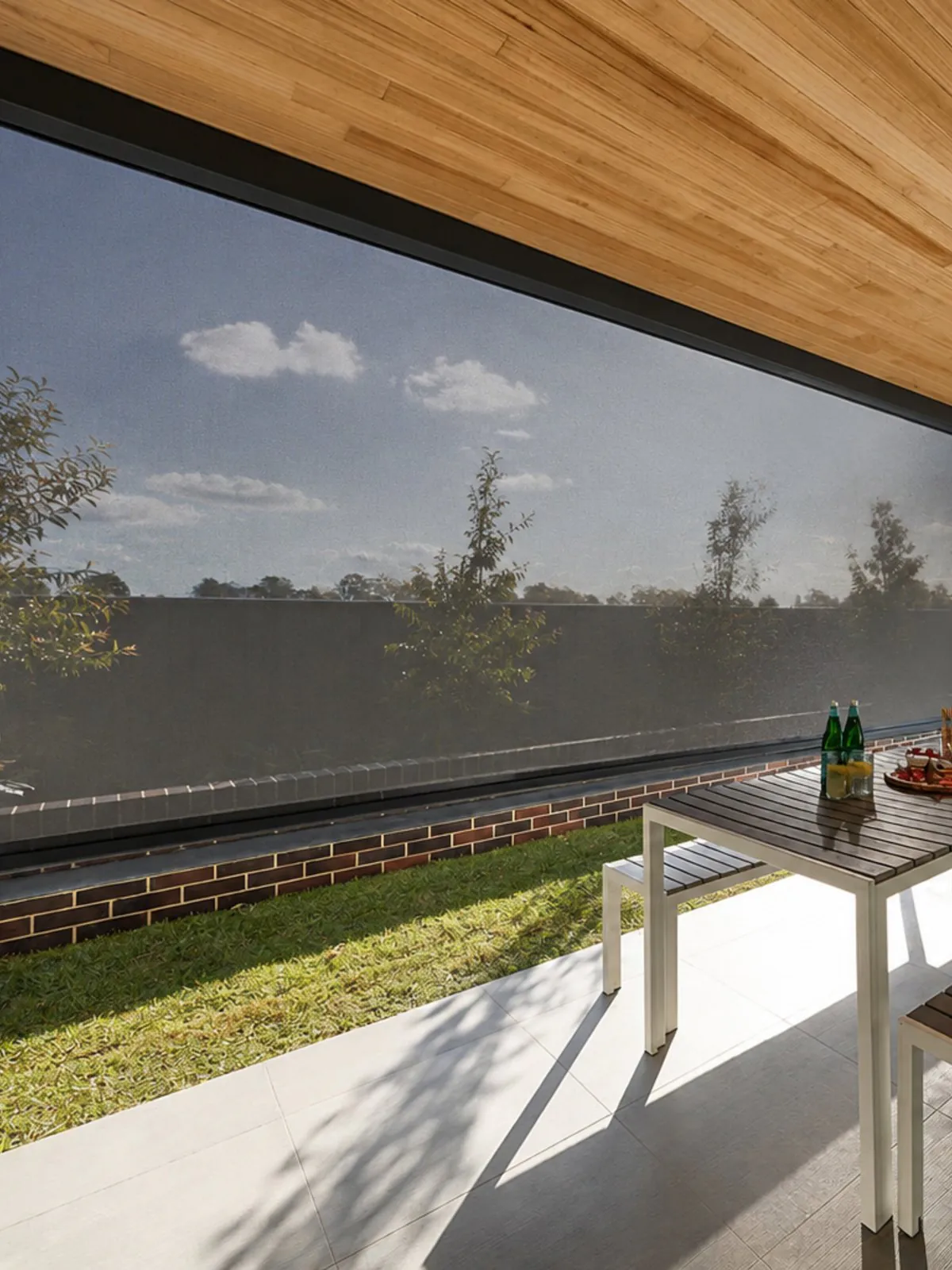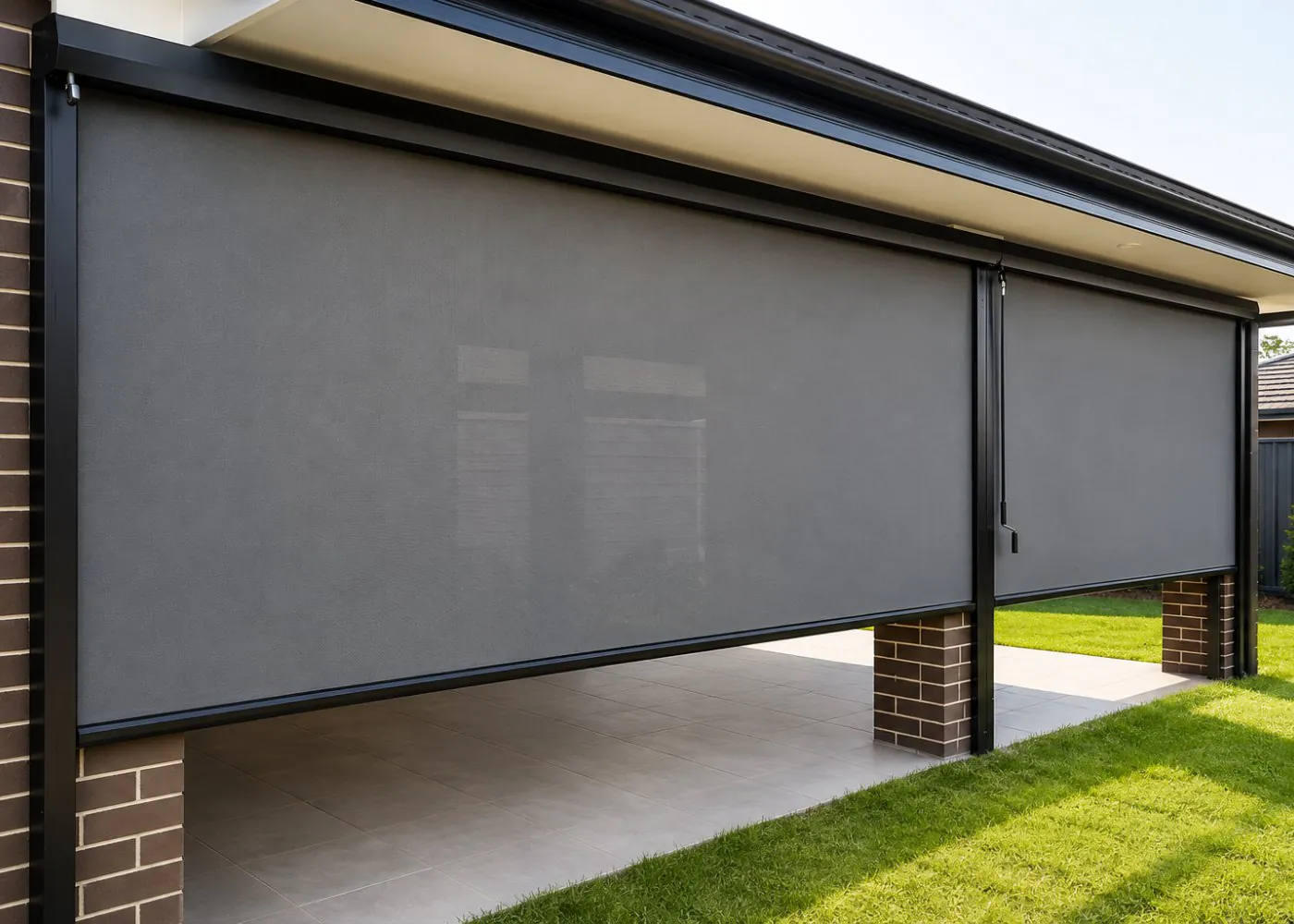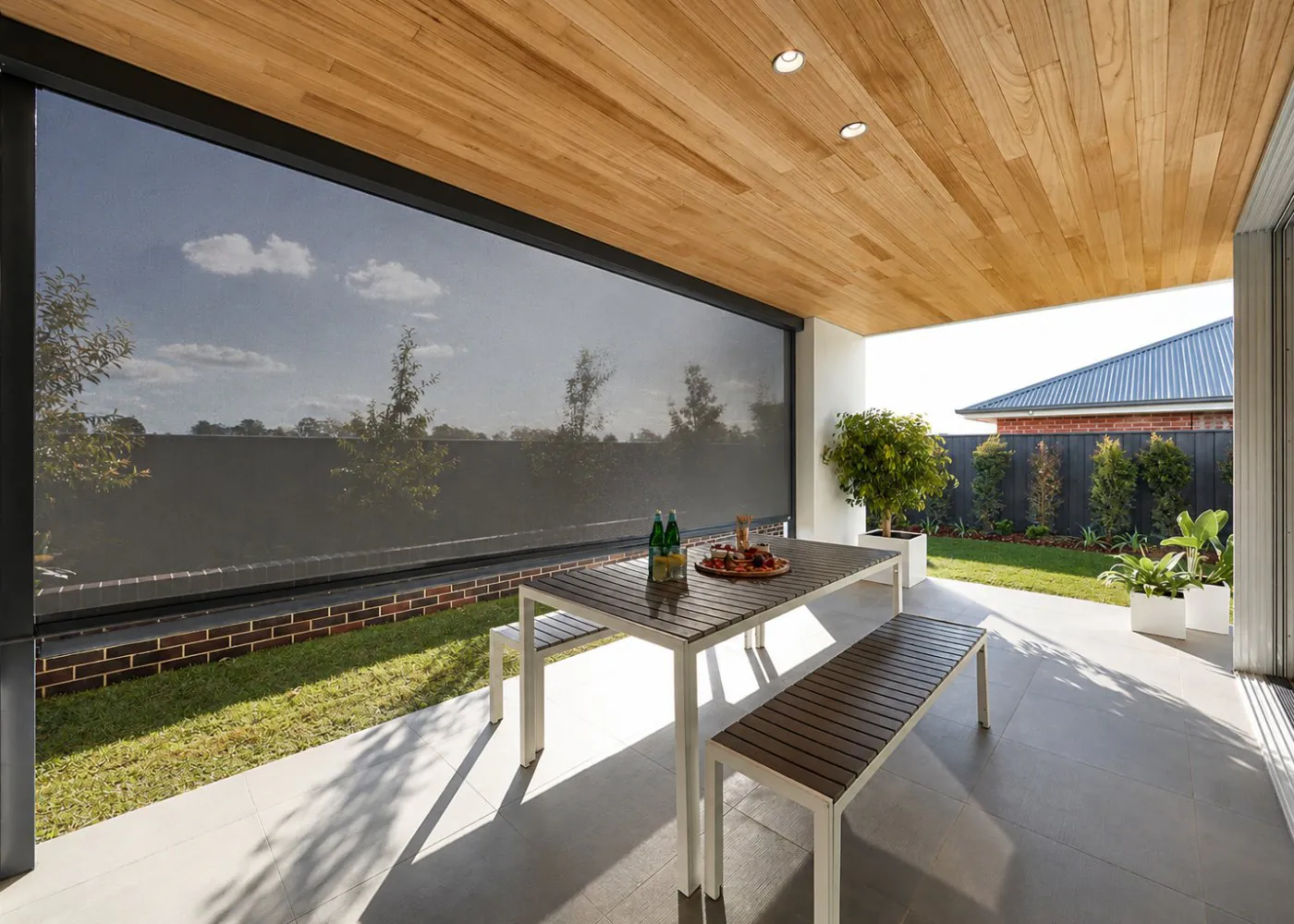
Four fabrics, four jobs
- Sun mesh — cuts heat and glare while keeping the view and the breeze. Rated by openness factor, from 2% to 30%.
- Bug mesh — keeps mosquitoes and flies off the patio and lets the air through. It gives little shade.
- Clear vinyl — a transparent wall against wind and rain. The only one of the four that keeps rain out.
- Blockout — 0% openness: full shade and full privacy, no view.
Do retractable screens stop rain?
Only clear vinyl does. Mesh — sun or bug — is woven with openings, and water goes through openings. A tight sun mesh slows a light sideways drizzle, but in real rain the patio behind it gets wet. If the goal is a covered patio you can sit on during a wet evening, the answer is clear vinyl, ideally under a roof or pergola that handles the rain falling straight down.
Clear vinyl comes with one rule you can’t skip: it’s a solid sheet, so it catches wind like a sail. Lower it when the air is calm and raise it when the wind picks up — never the other way round. That’s exactly what a wind sensor does on a motorized screen: it lifts the screen by itself before a gust can load it.
Rain → clear vinyl. Sun and heat → sun mesh. Mosquitoes → bug mesh. Privacy without a view → blockout. Need two of those? Say so at the consultation — often the answer is different fabrics on different sides of the same patio, like clear vinyl on the side the weather comes from and sun mesh on the side with the view.
Openness factor: 0% to 30%, explained
Sun mesh is rated by openness factor — the share of the fabric that is open weave. We carry it from 2% right up to 30%, plus 0% blockout, and that one number changes how the screen behaves more than anything else.
2% to 5% — heat, glare and daytime privacy
The tightest weaves stop the most sun and glare, and in daylight they hide the patio from the street or the neighbours. The view out becomes a soft haze. The right choice for a west-facing patio that’s unbearable at 4 p.m., or a balcony that looks straight into other units.
10% — the balanced choice
Real shade, a view you can still read, and noticeably more air moving through. If you can’t decide, this is where most patios end up.
15% to 30% — view and breeze first
The open end of the range keeps the outlook crisp and lets the breeze through almost untouched, with lighter shade. Good for a shaded or north-facing space where the problem is wind or a little glare rather than heat.
0% — blockout
No view at all, full privacy and full shade. Like clear vinyl it’s a closed surface, so it catches wind and relies on the wind sensor to go up when a gust comes through.
Colour matters almost as much as openness: a darker fabric gives a clearer view out, while a lighter one reflects more heat. The same trade-off applies to indoor screens — see blinds for south- and west-facing windows.
At a glance
| 0% (blockout) | No view · full privacy and shade · closed to the wind |
|---|---|
| 2% – 5% | Most heat and glare cut · hazy view · daytime privacy |
| 10% | Balanced shade and view · more airflow |
| 15% – 30% | Clear view · most airflow · lighter shade |
| Clear vinyl | Stops wind and rain · full view · raise in strong wind |
| Bug mesh | Stops insects · lets the air through · little shade |
| Fabric base | Fiberglass across the 0% – 30% range |
| Stops rain | Clear vinyl only |
Privacy flips after dark
Mesh privacy is a daytime effect. It works because it’s brighter outside than in: from the street you see the lit weave, not the shaded patio behind it. Once the sun goes down and your patio lights come on, the balance reverses, and people outside can see in through any mesh — even a tight one. If evening privacy matters, plan for blockout on that side, or keep the lighting low and warm.
Why fiberglass
The fabrics we use across the 0% to 30% range are fiberglass-based. It sounds like a detail; on a wide screen it’s the one that matters most. Polyester softens and stretches as it heats up, and a screen that stretches starts to sag and ripple between the tracks. Fiberglass has a far higher melting point and holds its shape through the temperature swings of a Montréal summer — hard sun in the afternoon, cool air at night. Fiberglass-based fabrics also generally resist fire better than polyester, which is worth knowing if the screen is going on a commercial terrace.
Choosing by where the screen goes
- West-facing patio that bakes in the afternoon: sun mesh at 5%, in a darker colour so the view stays readable.
- Balcony facing other units: 2% to 5% for daytime privacy — and blockout on the side that matters most if you use the balcony after dark.
- Covered patio or porch you want to use on wet evenings: clear vinyl, motorized with a wind sensor.
- Pergola or covered deck in mosquito season: bug mesh — see retractable bug screens for what actually keeps them out.
- The outside of a sun-facing window: sun mesh stops the heat before it reaches the glass, which no indoor blind can do.
For the hardware side — side tracks, housings, motors and where screens can be mounted — see our guide to heavy-duty outdoor blinds, or go straight to motorized retractable screens in Montréal and Ottawa.
Frequently asked questions
Do retractable screens keep rain out?
Only clear vinyl does. Sun mesh and bug mesh are woven with openings, so rain passes through. For a patio you can use in wet weather, choose clear vinyl, ideally under a roof or pergola.
What openness factor should I choose?
2% to 5% for the most heat, glare and daytime privacy; 10% as the balanced choice; 15% to 30% when you mainly want the view and the breeze. 0% is blockout: full privacy and no view.
Can I leave a clear vinyl screen down in the wind?
No. Clear vinyl is a solid sheet and catches wind like a sail. Lower it in calm weather and raise it when the wind picks up. A motorized screen with a wind sensor raises it automatically.
Do mesh screens give privacy at night?
Not really. Mesh hides the patio in daylight because it’s brighter outside than in. At night, with lights on, people outside can see in. Use blockout on the side that needs evening privacy.
Why fiberglass rather than polyester?
Fiberglass holds its shape through heat and cold, where polyester can stretch and sag between the tracks on a wide screen. Fiberglass-based fabrics also generally resist fire better.
Do you install retractable screens in Montréal and Ottawa?
Yes — with a free in-home visit to measure and bring fabric samples, and installation included, across Greater Montréal, Ottawa and Eastern Ontario, and farther for bigger projects.