The short version
Since 1 May 2021, the federal Corded Window Coverings Regulations (SOR/2019-97) have applied to every window covering manufactured, imported, advertised or sold in Canada. The rule is not “cords are discouraged.” It is a hard limit, enforced by Health Canada, and a blind that fails it cannot legally be sold here.
Two numbers do most of the work:
- A reachable cord with a free end must not exceed 22 cm when pulled with a force of 35 N.
- Any loop a child could reach must not exceed 44 cm in perimeter under the same test.
Twenty-two centimetres is shorter than most people picture — roughly the long side of a sheet of paper. It is deliberately too short to pass over a small child’s head. The 44 cm loop limit exists for the same reason: a loop that small cannot close around a neck.
These aren’t arbitrary. They were set so that no reachable cord or loop on a new blind can form a hazard, in any position — fully open, fully closed, or anywhere in between — for the entire useful life of the product.
What else the regulations cover
Cord length gets the attention, but the regulation is broader than that:
- Small parts. Any accessible part that fits inside a small-part cylinder must not come off under 90 N of force — so cord stops, end caps and tassels can’t become choking hazards.
- Cords that are out of reach must stay out of reach — in every position of the blind, for its whole life. A cord that is safely tucked away only when the blind is fully raised does not comply.
- Lead limits. No external component may contain more than 90 mg/kg of lead.
- Bilingual labelling. Information, assembly and operating instructions and warnings must be legible, conspicuous, and in both English and French.
That last point is a quiet quality signal. If a blind arrives with no French on the packaging or no warning label at all, something is wrong with its route into the country.
The part almost nobody mentions: your existing blinds
The regulations govern sale. They do not reach backwards into homes. If your house, condo or rental was fitted before May 2021 — or fitted since with grey-market product — those long looped chains are still hanging there, and no one is going to come and change them.
This is the real risk in Montreal’s older housing stock, where blinds are often a decade or two old and inherited from the previous owner or landlord. Worth doing a walk-through this week:
- Any looped chain or cord long enough to reach a child’s neck height — especially in bedrooms, nurseries and play areas.
- Cords near anything climbable: a crib, a bed, a sofa pushed against the window, a change table, a toy box.
- Cords that look tidied away with a cleat or a tie-down. Those work only when every adult in the house uses them every single time.
Retrofit tension devices and cord cleats exist and are better than nothing. But they’re a mitigation, not a fix — they depend on human habit, which is exactly what fails on a busy evening.
At a glance
| Regulation | Corded Window Coverings Regulations, SOR/2019-97 |
|---|---|
| In force since | 1 May 2021 |
| Reachable cord, free end | Max 22 cm (tested at 35 N) |
| Reachable loop | Max 44 cm perimeter (tested at 35 N) |
| Small parts | Must not detach under 90 N |
| Lead, external components | Max 90 mg/kg |
| Labelling | English and French, legible and conspicuous |
| Applies to | Anything manufactured, imported, advertised or sold in Canada |
| Does not apply to | Blinds already installed in your home |
Cordless, motorized or short-cord — which should you actually pick?
Cordless (spring) — the default for kids’ rooms
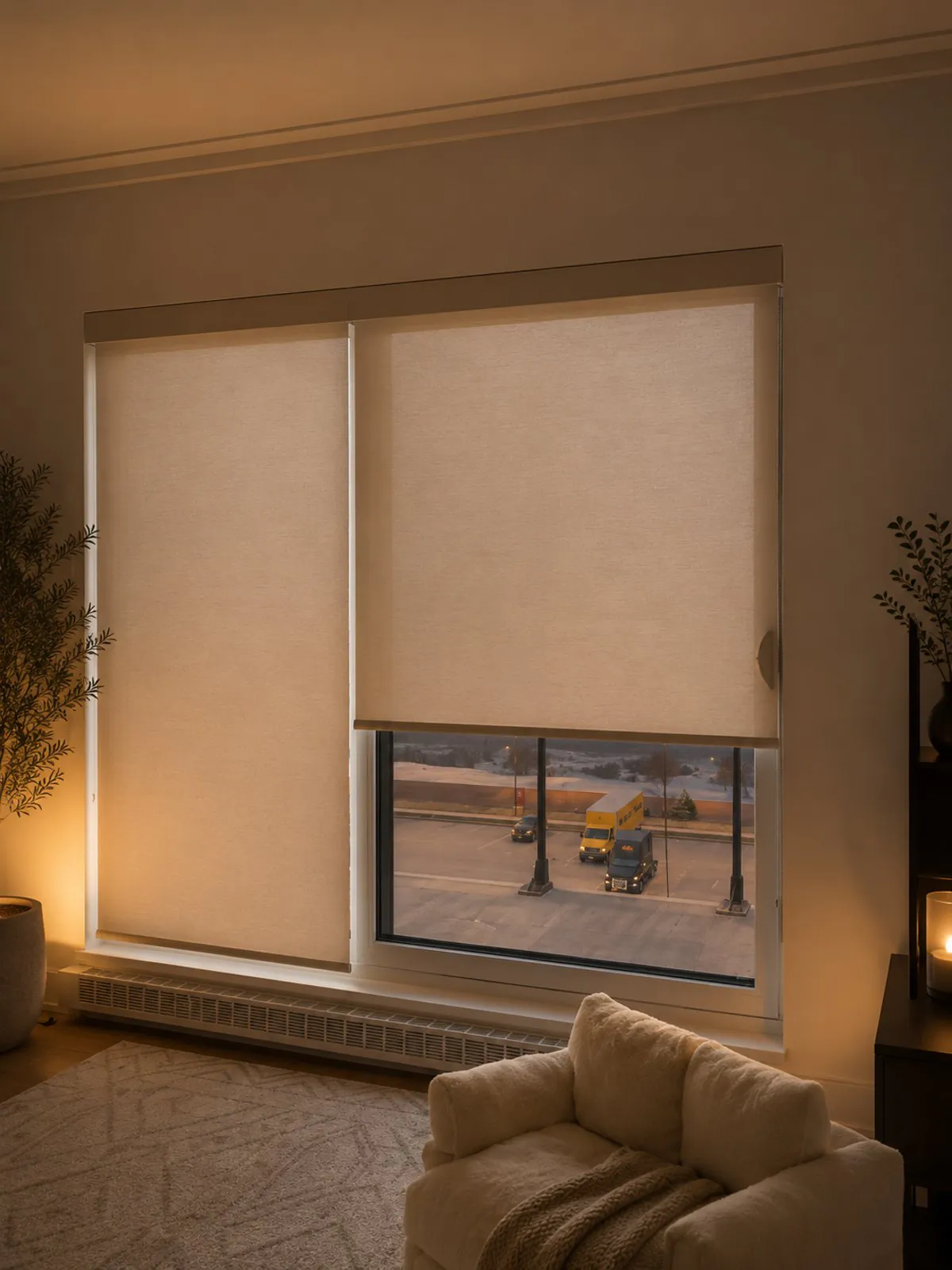
You push the bottom bar up or pull it down by hand, and a spring holds it. No chain, no cord, nothing on the window at all. It’s the cleanest look, the lowest cost of the safe options, and it never runs out of battery. The trade-off: on a very wide or very tall blind, a spring mechanism takes a firm hand, and you have to be able to reach the bottom bar — which rules it out for high windows and skylights.
Motorized — the answer for anything big or out of reach
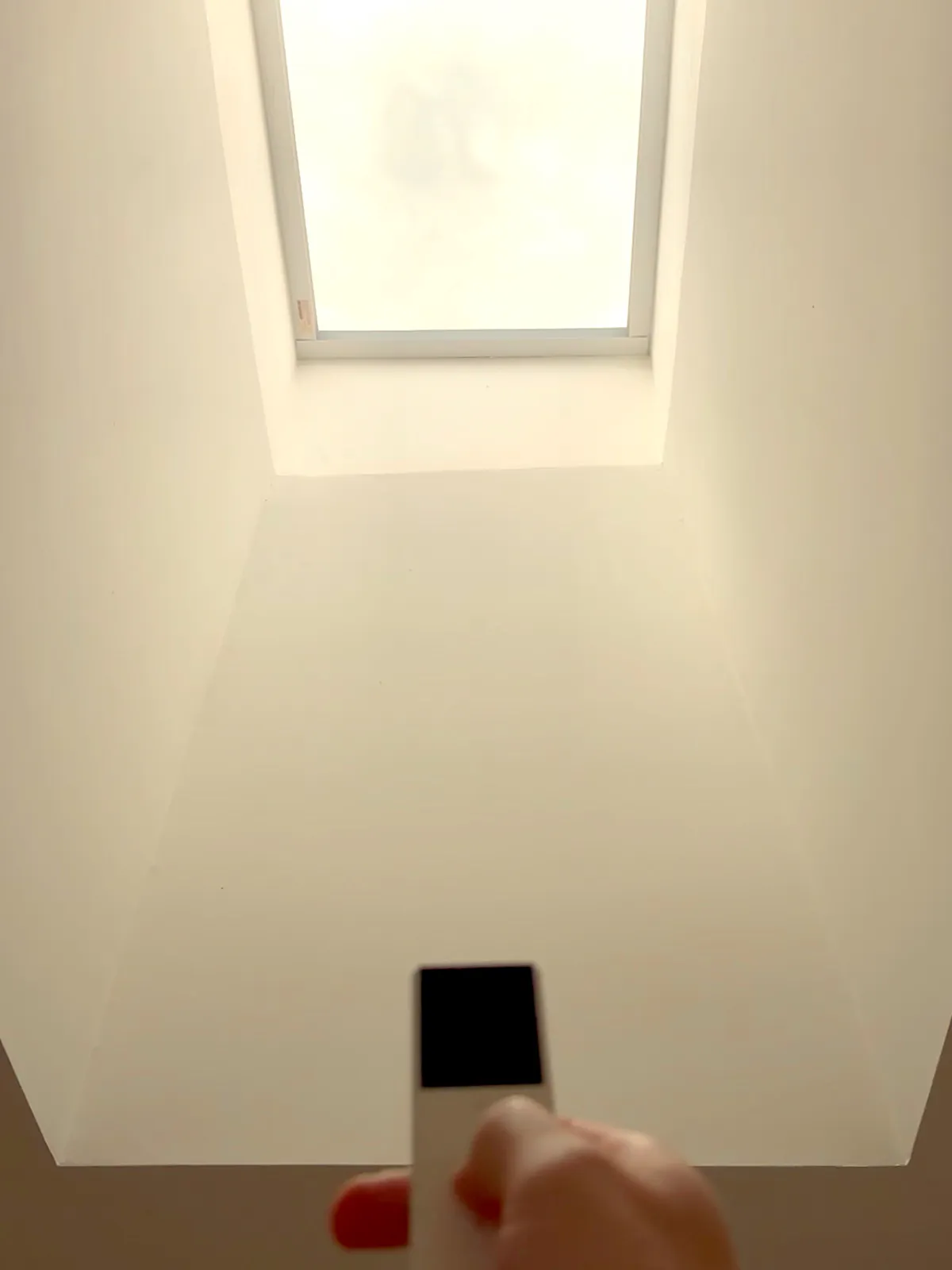
A motor removes the cord and the reaching problem at once. It’s the right call for tall condo glass, stairwell windows, skylight shades and any window behind furniture. It costs more per blind, and battery models need charging once or twice a year. See are motorized blinds worth it? for the honest cost breakdown, and our smart-home guide if you want them on a schedule or on your phone.
Short-cord and compliant chain
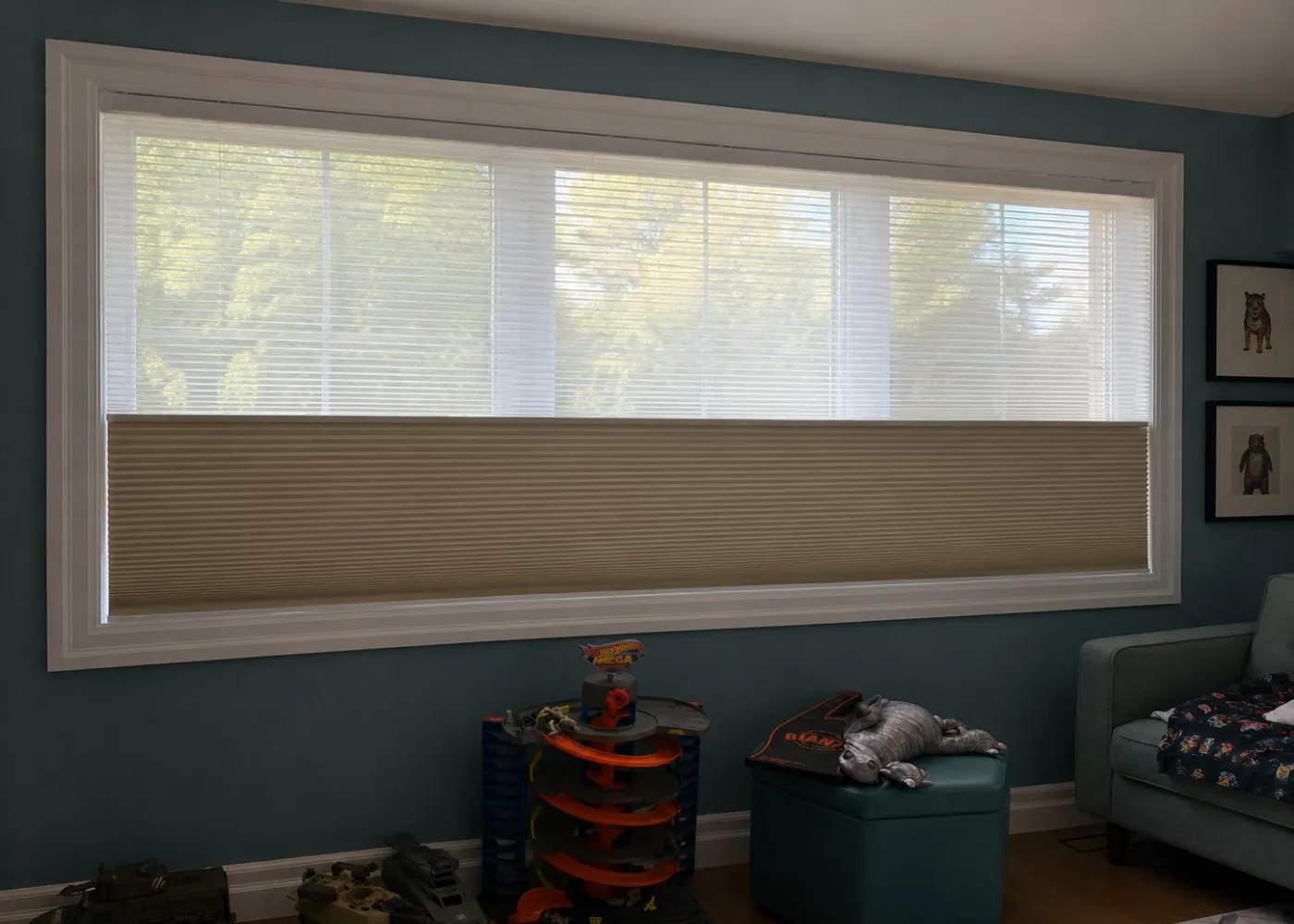
A compliant chain system is still legal and still sold — the chain is simply short enough, or restrained enough, to meet the limits. It’s the most economical option and it’s genuinely fine in a room where small children don’t go: a home office, a bathroom, a laundry room. We just don’t recommend it for a nursery when cordless costs so little more.
What we do
Every blind we make and install meets SOR/2019-97 — that isn’t a feature, it’s the legal floor. What we actually do differently is ask, room by room, who uses it. If there’s a crib in the room, we quote it cordless or motorized and we say why. If a window is behind a sofa a toddler can climb, we’ll tell you that too.
Do the nursery before the baby arrives, not after. Cordless blackout is the single most useful window decision you’ll make in that room — it covers safety and sleep in one go. See blackout blinds for a nursery.
Rooms, ranked by how much this matters
- Nursery and kids’ bedrooms — cordless or motorized, no exceptions.
- Playroom, family room, any room with a climbable window seat — same.
- Living room — cordless if children live there or visit often; motorized if the glass is large.
- Home office, bathroom, laundry — a compliant chain is reasonable.
- Stairwells and high windows — motorized, for reach as much as safety.
Frequently asked questions
Are corded blinds illegal in Canada?
Not exactly. Corded window coverings can still be sold, but since 1 May 2021 any reachable cord with a free end must be no longer than 22 cm and any reachable loop no more than 44 cm in perimeter. Long looped cords of the old style can no longer be legally sold in Canada.
Do the rules apply to blinds already in my home?
No. The Corded Window Coverings Regulations govern what can be manufactured, imported, advertised or sold — they don’t apply retroactively to what’s already installed. If your blinds pre-date May 2021, you should check them yourself.
Are cordless blinds more expensive?
A little, and much less than most people expect. On a standard bedroom window the gap between a chain and a cordless spring is small enough that we recommend cordless for any room a child uses. Motorization costs meaningfully more.
What about the cord on my old blinds — can I just tie it up?
A cleat or tension device is better than a loose cord, but it only works if every adult uses it every time. For a nursery or a play area we’d replace the blind rather than rely on a habit.
Are motorized blinds child-safe?
Yes — there’s no operating cord at all. Check that any power cable on a hardwired motor is also out of reach; battery and rechargeable motors avoid that entirely.
Do you install cordless blinds across Montreal?
Yes — cordless and motorized options across every fabric we carry, with free measuring and installation across Greater Montreal, Ottawa and Eastern Ontario.