Why patio doors defeat ordinary blinds
Four things go wrong, and they go wrong in combination:
- Traffic. This is a door. Something that’s mildly annoying to operate on a bedroom window becomes intolerable when you use it ten times on a summer evening.
- The handle. Sliding door handles stand proud of the glass. An inside-mounted blind hung too close will foul on it — a problem you discover after installation, not before.
- The stack. Whatever the covering is, it has to go somewhere when open. On a 2.4 m opening, a badly planned stack can eat 40 cm of the doorway you actually walk through.
- Width and weight. Patio doors are wide. A single blind spanning the whole opening is heavy to lift and prone to sagging if it isn’t specified for the span.
Every good answer here is really an answer to “where does the covering go when the door is open?”
The options, honestly compared
Vertical blinds — unfashionable, still the practical champion
Vertical louvres have an image problem, largely earned by yellowing plastic slats in 1990s offices. But the mechanics are genuinely right for this opening: they draw sideways to one side, they stack tight against the jamb, they tilt for privacy without being fully closed, and they don’t care how wide the door is.
Modern fabric verticals — in linen looks, textured weaves or the same solar screen fabrics you’d put on a roller — look nothing like the office version. If pure function is the priority, this is still the answer.
Panel track (sliding panel) — the vertical blind, restyled
Wide flat panels of fabric that slide past each other on a track, like a Japanese shoji screen. Same sideways logic as a vertical blind, but in three to five broad panels instead of many narrow louvres, so it reads as a contemporary architectural feature rather than a blind.
You can mix panels — sheers and solids on the same track — for a light setting and a privacy setting. The trade-off is the stack: panels overlap when open, but they still need roughly a panel’s width of wall or glass to sit against.
Curtains on a ceiling track — the best-looking option
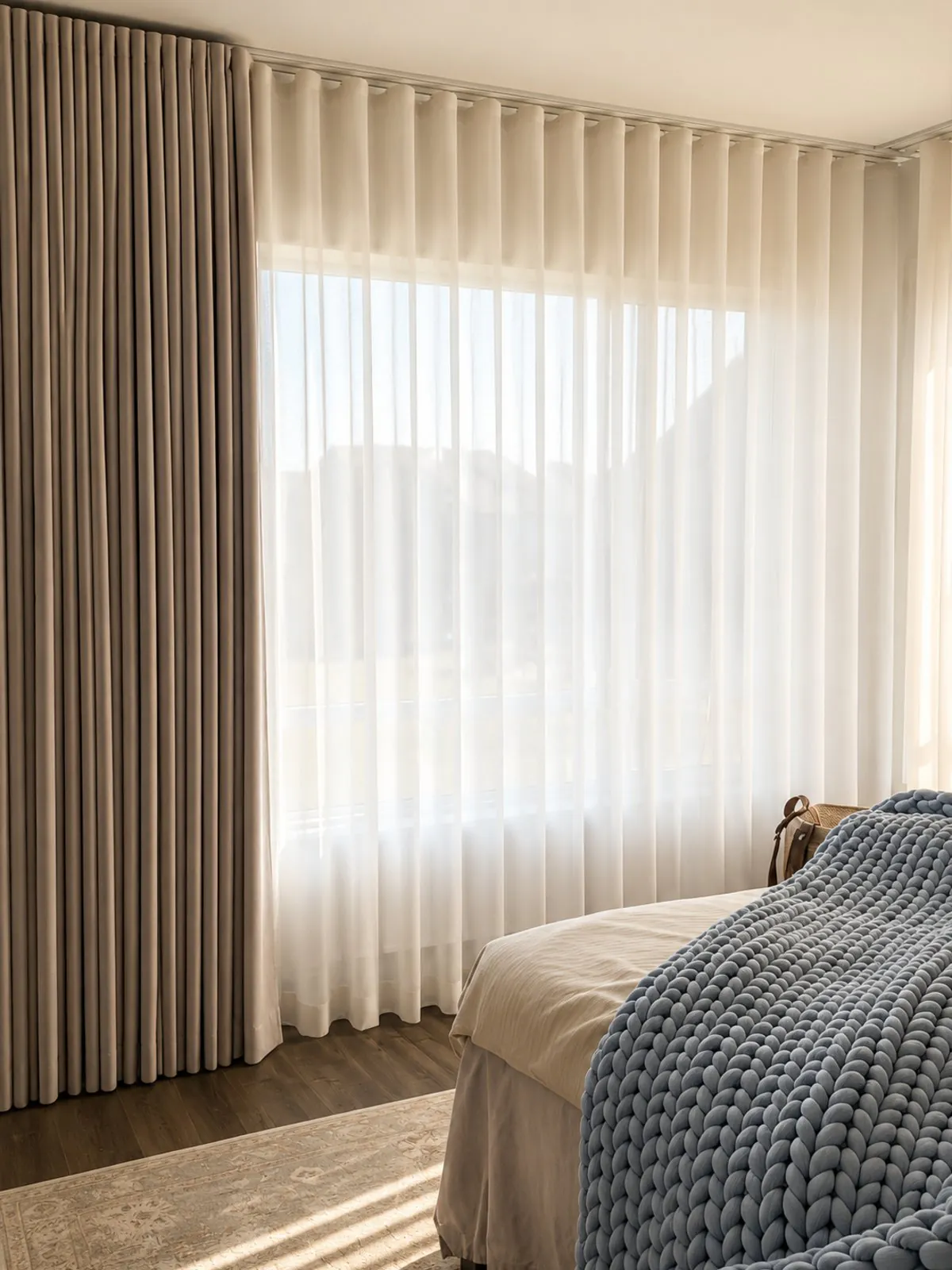
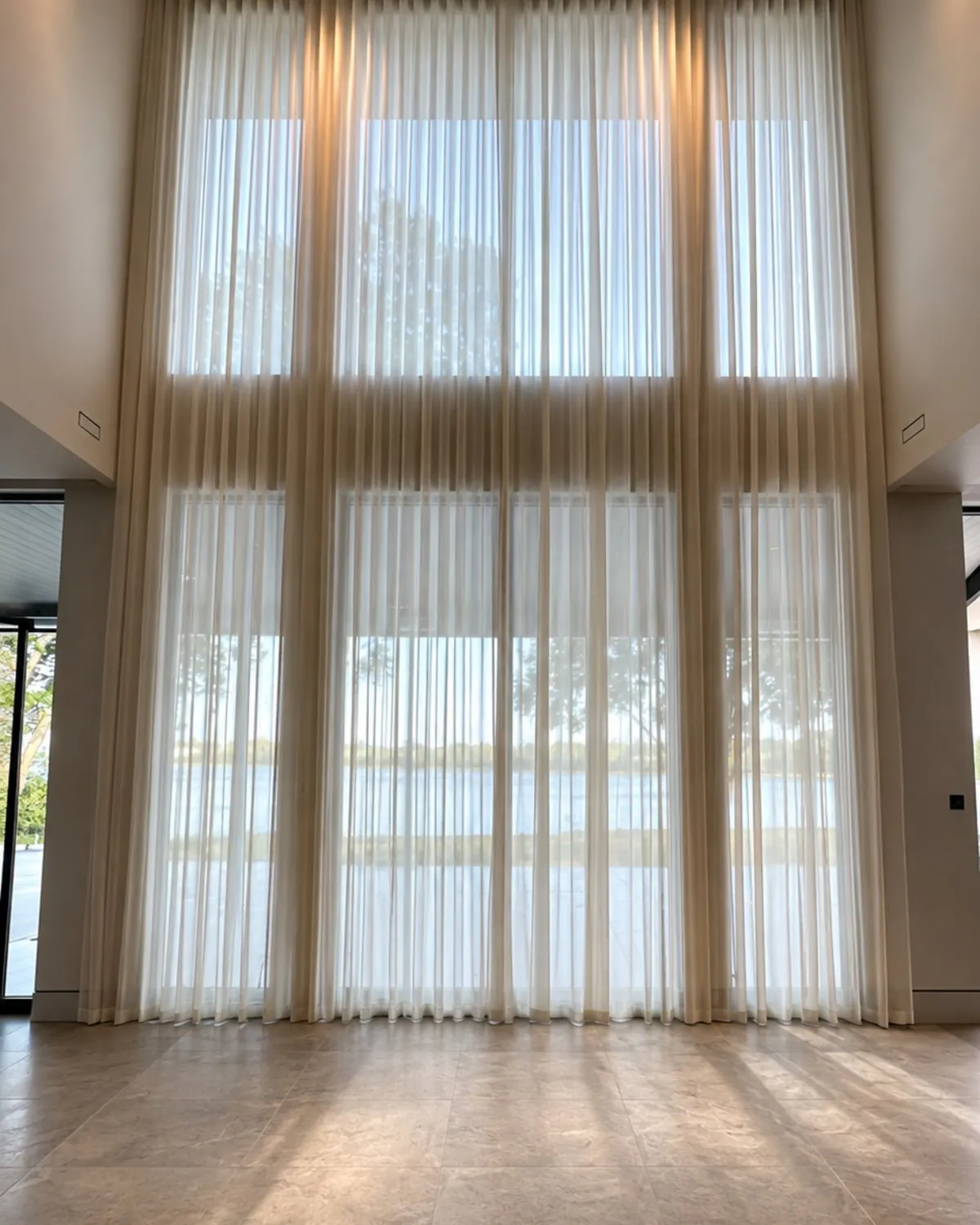
On a wall of glass with a door in it, floor-to-ceiling curtains on a recessed ceiling track beat everything else aesthetically. They soften a hard architectural wall, add warmth in winter, and when you draw them fully back they stack outside the glass entirely — which is the one thing no blind can do.
The requirement is wall to stack onto. If your glass runs corner to corner with nothing either side, the curtains have to stack over the glass, and you lose a slice of view and light permanently. Measure that before you fall in love with the idea.
A single wide roller or zebra — clean, with a caveat
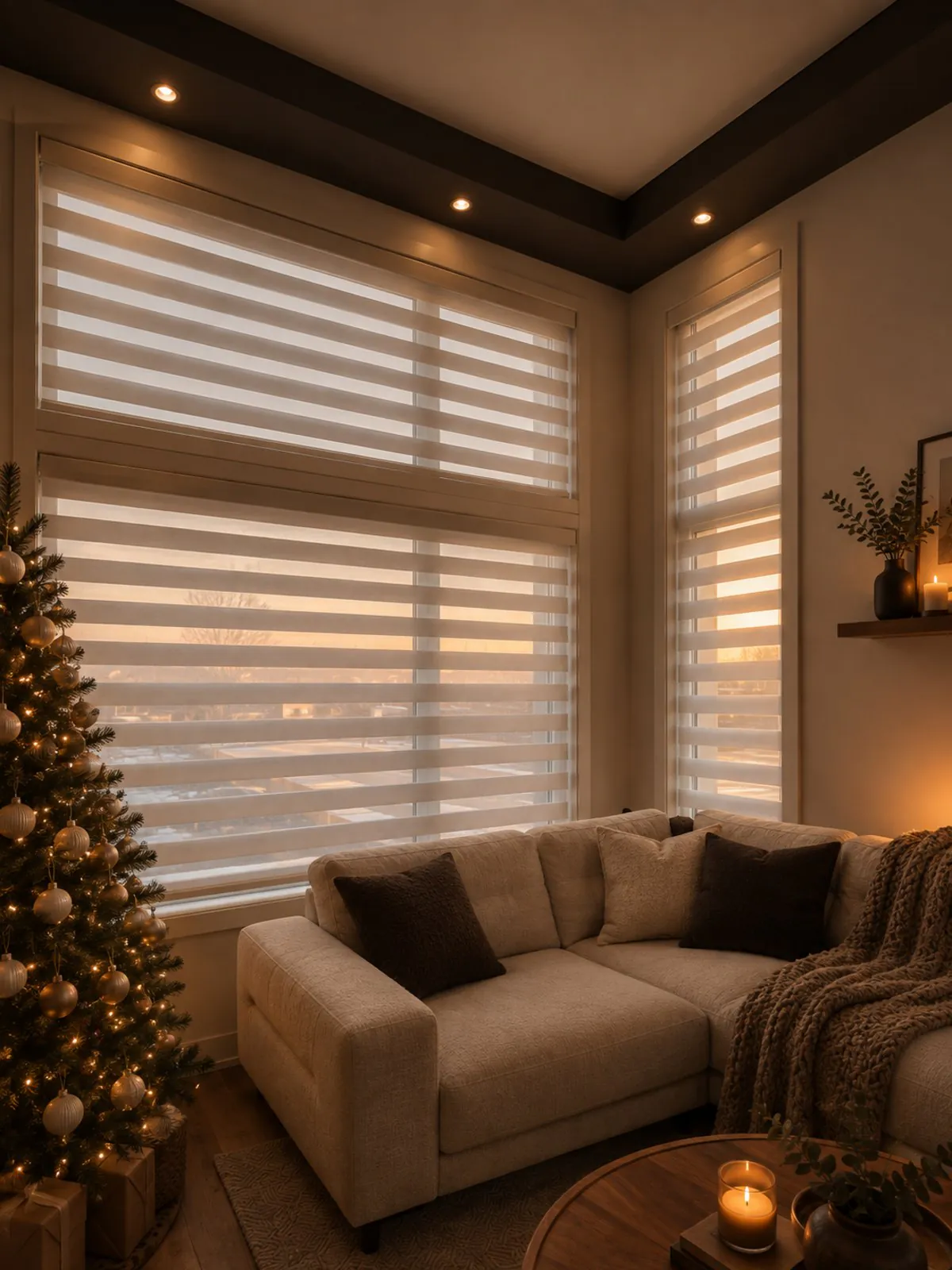
A roller or zebra blind sized to the whole opening looks the tidiest of all: one clean line, nothing visible when raised. It works well on doors you treat as a window most of the time — a balcony door used mainly for light and view.
Where it struggles is a door in constant use, because the whole blind has to go up before anyone walks through. On wide spans, specify a heavier tube to prevent deflection, and motorize it — a 2.5 m blackout roller is a lot of fabric to haul up by chain several times a day.
Two or three narrower blinds instead of one
An underrated fix. Splitting the opening lets you raise only the panel over the part that opens and leave the fixed pane covered. Lighter to operate, cheaper to replace if one is damaged, and it avoids the deflection problem entirely. The cost is a visible join or two.
Honeycomb, for a cold patio door
Cellular shades are available in vertical formats that draw sideways, which matters because a patio door is usually the largest single expanse of glass in the house and therefore the biggest heat leak. If your door is on the cold side of the house and the room is uncomfortable in January, this is worth the premium — see best blinds for cold-climate winters.
At a glance
| Best for heavy daily traffic | Vertical blinds or panel track |
|---|---|
| Best looking | Curtains on a ceiling track |
| Cleanest when open | Single wide roller or zebra |
| Best for a cold door | Vertical honeycomb |
| Best for glare on a screen | Solar screen roller or zebra |
| Handle clearance, inside mount | Allow 4–6 cm from glass to blind |
| Typical stack, panel track | Roughly one panel width |
| Wide spans | Heavier tube + motorization above ~2 m |
| Child safety | Cordless or motorized — see below |
The measurements that decide it
Three numbers are worth taking before you talk to anyone, including us:
- Handle projection. How far the handle stands out from the glass. This determines whether an inside mount is possible at all. As a rule we allow 4–6 cm of clearance; less than that and the blind fouls, and you’ll hear it every time.
- Stacking space either side. How much wall you have to park a covering on. This is what decides between curtains (needs wall) and vertical or panel track (can stack onto the glass edge).
- Head clearance. Distance from the top of the frame to the ceiling. Under about 10 cm and a ceiling-mounted track is usually the cleaner answer than trying to squeeze a cassette into the reveal.
The general method is in how to measure windows for blinds — but honestly, patio doors are the case where we’d rather come and measure ourselves. The handle clearance mistake is expensive and not reversible.
Inside or outside mount?
Outside mount is usually right for a patio door. Mounting above and wider than the opening clears the handle, hides the frame, makes the door look larger, and cuts the light gaps down the sides. Inside mount looks neater and is worth it only when the reveal is genuinely deep and the handle allows it.
Motorization, and why it earns its keep here
We say “it depends” about motors on most windows. On a patio door we mostly don’t. It is the widest, heaviest covering in the house, on the glass that gets the most sun and the most use, and often the one you’d most like on a schedule. If you motorize one thing in the house, motorize this. See are motorized blinds worth it? and, for the ecosystem question, smart blinds: Apple Home, Alexa & Matter.
Sun, heat and the fading problem
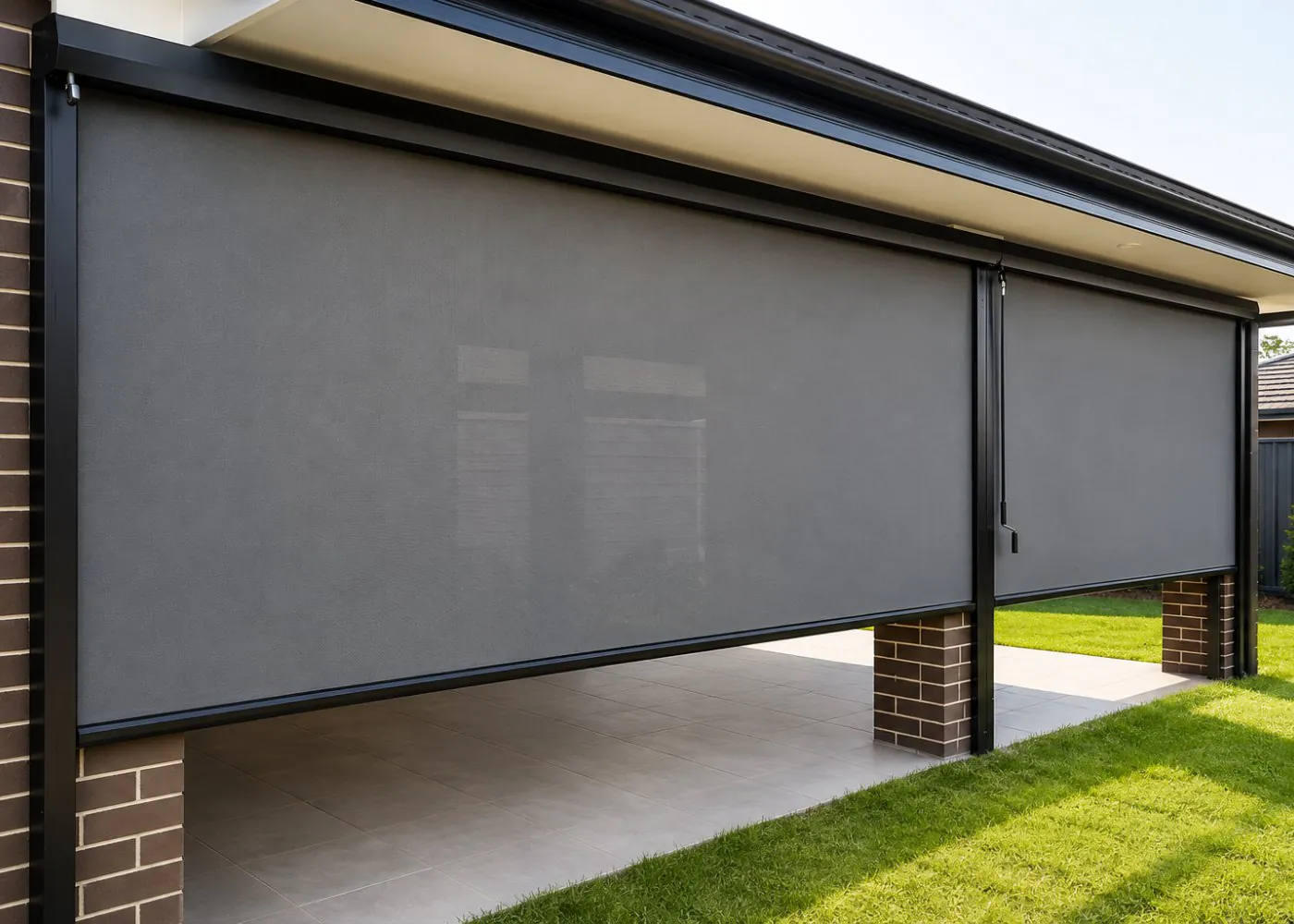
Patio doors usually face the garden, which in most homes means south or west. That makes them the single biggest source of summer heat gain and the reason the floor in front of them fades in a hard-edged rectangle. A solar screen fabric on a roller or vertical cuts a large share of it while keeping the view — the openness-factor logic is in blinds for south- and west-facing windows. If the door opens onto a covered patio or balcony, an exterior screen outside the glass beats anything you can hang inside.
A patio door blind sits at floor level with a long draw, which is exactly the geometry Canada’s cord rules exist to prevent. Cordless wand-operated verticals and motorized options both solve it — see cordless and child-safe blinds.
Our picks
- Family patio door in daily use: fabric vertical blind or panel track, wand or motorized.
- Wall of glass in a living room: curtains on a recessed ceiling track, stacking onto the wall.
- Balcony door used mainly for light: a single wide roller or zebra, motorized.
- West-facing door that overheats: solar screen fabric, or an exterior screen if there’s a patio roof.
- Cold door on the north side: vertical honeycomb.
- Rental: outside-mount roller on the frame — minimal holes, comes off cleanly.
Frequently asked questions
What are the best blinds for a sliding patio door?
For a door in daily use, a fabric vertical blind or a panel track — both draw sideways and stack clear of the opening. For looks, floor-to-ceiling curtains on a ceiling track. For a door used mainly as a window, a single wide roller or zebra blind, motorized.
Are vertical blinds outdated?
The 1990s plastic ones are. The mechanics aren’t — drawing sideways and stacking tight against the jamb is still the right answer for a door. Modern fabric verticals in linen looks, textured weaves or solar screen fabrics look nothing like the office version.
How much clearance do I need for the door handle?
Allow 4–6 cm between the glass and the blind for an inside mount. If the handle projects more than that, use an outside mount above and wider than the opening — which for patio doors is usually the better choice anyway.
Inside or outside mount for a patio door?
Outside mount, usually. It clears the handle, hides the frame, makes the door look larger and reduces light gaps at the sides. Inside mount only when the reveal is deep and the handle allows it.
Should I use one wide blind or several narrower ones?
Several is often better on a wide door — lighter to operate, cheaper to replace one, and no sagging on the span. One wide blind looks cleaner, but above roughly 2 m specify a heavier tube and motorize it.
Are patio door blinds child-safe?
They need to be — a long draw at floor level is exactly the hazard Canada’s cord regulations target. Choose cordless wand-operated verticals or motorized operation, both of which remove hanging cords entirely.