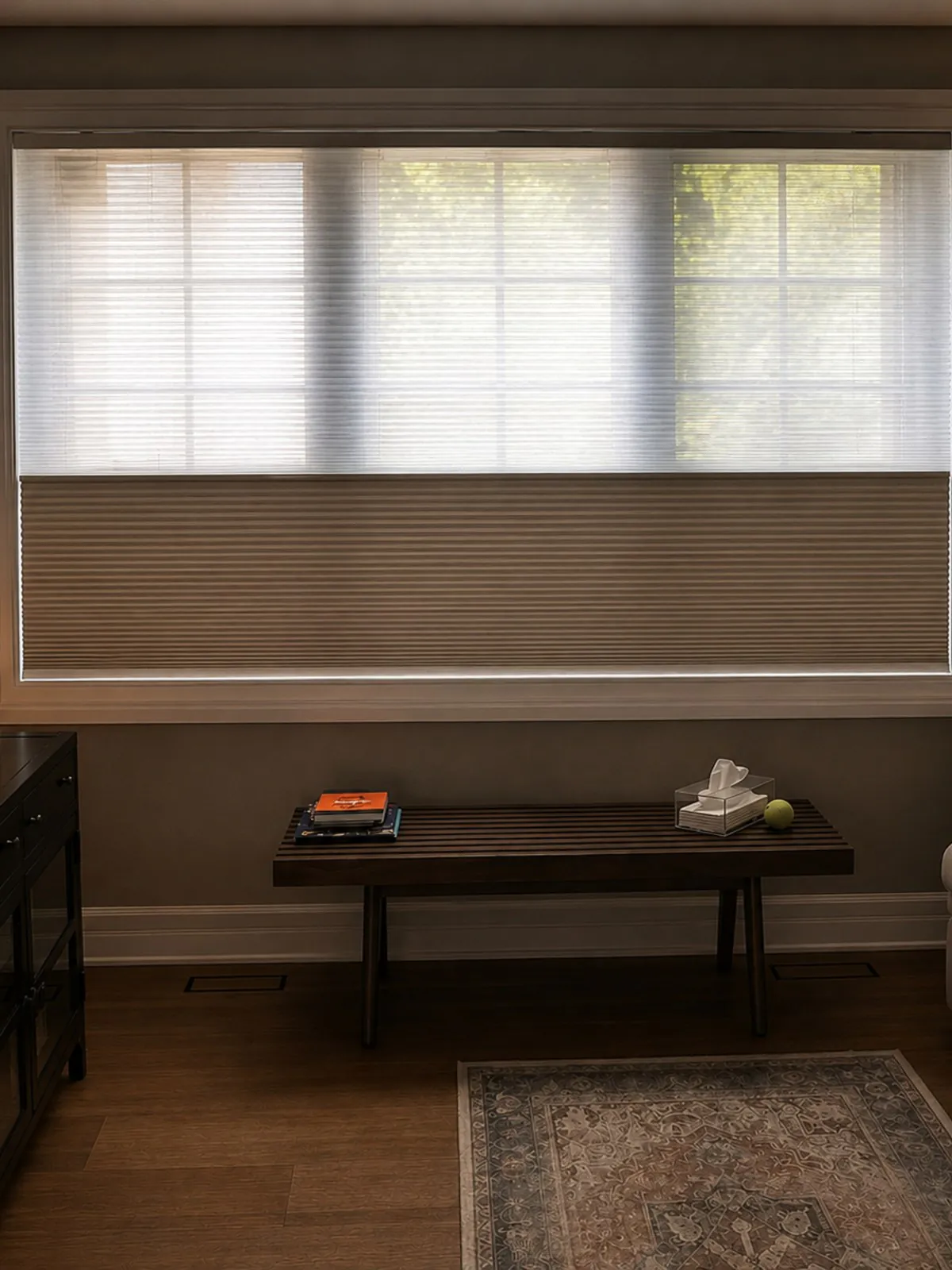
The three rules that prevent most damage
- Dry first, always. Dust is abrasive. Wiping a dusty blind with a damp cloth grinds grit into the fabric and turns light dust into a grey smear. Vacuum or brush before anything wet touches it.
- Damp, never wet. Most blind fabrics are coated, bonded or backed. Soaking separates layers, leaves tide marks that never fully dry out, and can shrink a fabric out of square permanently.
- Test somewhere invisible. The bottom few centimetres behind the bottom bar, or the edge that sits behind the frame. Give it a day before you commit to the whole blind.
Taking a blind down and putting it in the bath. It feels thorough. It delaminates coated fabrics, floods cellular pockets that then take weeks to dry, and is the fastest way to turn a good blind into a replacement.
Routine, by material
Roller blinds — the easiest
Lower the blind fully so the whole face is flat. Vacuum on the lowest suction with a soft brush head, top to bottom. For marks, a barely damp cloth with a drop of mild soap, blotting rather than scrubbing, then leave it fully lowered until completely dry — rolling up a damp blind is how you get a stripe. Easy-clean and moisture-resistant fabrics for kitchens and bathrooms take a proper wipe; textured jacquards should stay dry.
Honeycomb / cellular — dry only
The cells are the point and also the vulnerability: they’re bonded pleats with open pockets. Vacuum on low with a brush attachment, moving along the pleats rather than across them. A can of compressed air, or a hairdryer on cool, clears dust from inside the cells — hold it at an angle so the dust comes out rather than being driven deeper.
For a mark, dab with a slightly damp cloth and stop early. Never soak, never submerge, never machine wash. If a cellular blind has been flooded, the crease pattern rarely recovers.
Zebra / day & night — gentlest of all
Two layers of alternating sheer and solid bands, and the sheer bands are the fragile part. Dry dusting only, with a very soft brush or the lowest vacuum setting, moving in the direction of the bands. Avoid pressing — the layers can shift out of alignment, and once the bands don't line up cleanly the blind never looks right again.
Roman shades — vacuum in the folds
Lower fully, then vacuum on low, paying attention to the horizontal folds where dust collects. Spot-clean carefully and sparingly. Roman shades are lined and rod-pocketed, so anything wetter than a damp cloth risks the lining shrinking at a different rate from the face fabric — which shows as puckering along every fold. Heavy soiling is a job for a professional dry clean, off the window.
Blackout fabrics — mind the coating
Blackout works because of an opaque coating or a bonded backing. That coating is what you're protecting. Dust dry, wipe marks with a damp cloth and no solvent, and never fold a blackout blind sharply — a crease in the coating becomes a permanent pinhole of light.
Curtains and drapes — read the label first
The care label is not boilerplate; lined and interlined curtains often specify dry clean because the layers shrink differently in water. Where washing is allowed, cold and gentle, and rehang while slightly damp so the weight pulls the creases out.
For most curtains the better routine is no washing at all: vacuum with an upholstery head every few months, and steam them on the rail. A handheld steamer, top to bottom, refreshes the fabric and drops the folds back into shape without any of the shrinkage risk. Sheers grey slowly from air rather than from touching anything — cold, gentle, and back on the rail damp.
Smart film — treat it as coated glass
A soft microfibre cloth, barely damp, with a mild non-ammonia cleaner. No ammonia, no solvents, no abrasives, no squeegee edges or blades, and never spray liquid at the edges where the film is sealed. Wipe gently in one direction.
Outdoor blinds — the exception that likes water
Exterior screens are built for weather, so they're the one type you can genuinely hose down. Rinse, brush any mesh with a soft brush and mild soap, rinse again, and let them dry fully before rolling up. Don't roll a wet screen away for the winter — that's how mildew starts.
At a glance
| Roller | Vacuum low · damp cloth on marks · dry fully lowered |
|---|---|
| Honeycomb | Dry only · vacuum along pleats · compressed air in cells |
| Zebra | Dry only · soft brush · never press the sheer bands |
| Roman | Vacuum the folds · professional dry clean if heavy |
| Blackout | Dust dry · damp cloth · never crease the coating |
| Curtains | Vacuum + steam on the rail · check the label before washing |
| Smart film | Damp microfibre · no ammonia, solvents or blades |
| Outdoor | Hose, soft brush, mild soap · dry before rolling up |
| Routine | Light dust monthly · thorough twice a year |
How often, realistically
- Every month or so: a quick pass with a duster or vacuum brush on the blinds you see most. Two minutes a window.
- Twice a year: a proper going-over — spring and autumn are natural points, and autumn matters more than people think, because blinds spend the winter closed against condensation.
- Kitchens: more often. Airborne grease makes dust stick, and once it has bonded it needs solvent — which is exactly what most blind fabrics can't take. Staying ahead of it is the entire strategy.
- Bathrooms: ventilate more than you clean. Moisture, not dirt, is what ages a bathroom blind.
Montreal specifics
Two local things shorten a blind's life here:
Winter condensation. Cold glass plus indoor humidity puts water on the window, and a closed blind sits right in it. Any blind that's regularly damp at the bottom edge will eventually mark or mildew. Leave a small air gap at the bottom on the coldest nights, run the bathroom fan, and if a particular window does this every winter it's telling you something about the glass — see best blinds for Montreal winters.
Spring construction dust and pollen. April and May coat everything, and it's abrasive. This is the one time of year the dry-first rule really earns its keep.
When cleaning isn't the answer
Some things don't come back, and it's worth knowing before you spend a Saturday on it: yellowed blackout coating, delaminated cellular pleats, sheer bands that no longer align on a zebra blind, sun-rotted fabric that tears at a touch. If a fabric has gone brittle or a blind has water-marked through, replacement is the honest answer — and if the damage came from sun, the solar screen options are worth reading before you replace like with like.
If you're unsure what a fabric will take, send us a photo before you try anything. We'd rather answer a message than replace a blind you cleaned once, hard.
Frequently asked questions
Can I wash blinds in the bath?
No. It's the most common way blinds get ruined — it delaminates coated fabrics, floods cellular pockets and leaves tide marks that don't dry out. Vacuum dry and spot-clean instead. Exterior screens are the one exception and can be hosed down.
How do you clean honeycomb blinds?
Dry only. Vacuum on low with a soft brush attachment, moving along the pleats, and use compressed air or a hairdryer on cool at an angle to clear dust from inside the cells. Dab marks with a barely damp cloth. Never soak them.
Can curtains be washed at home?
Check the care label first — lined and interlined curtains usually need dry cleaning because the layers shrink at different rates. Where washing is allowed, use cold and gentle, and rehang while slightly damp. For most curtains, vacuuming and steaming on the rail is the better routine.
How do I clean a zebra blind?
Dry dusting only, with a very soft brush or the lowest vacuum setting, moving in the direction of the bands. Don't press or scrub — the two layers can shift out of alignment, and misaligned bands can't be corrected.
What can I use on smart film?
A soft microfibre cloth, barely damp, with a mild non-ammonia cleaner. No ammonia, solvents, abrasives or blades, and don't spray liquid at the sealed edges.
How often should blinds be cleaned?
A light dust monthly on the blinds you use most, and a thorough clean twice a year. Kitchens need more, because airborne grease makes dust bond to the fabric.