The quick comparison
| Blinds | |
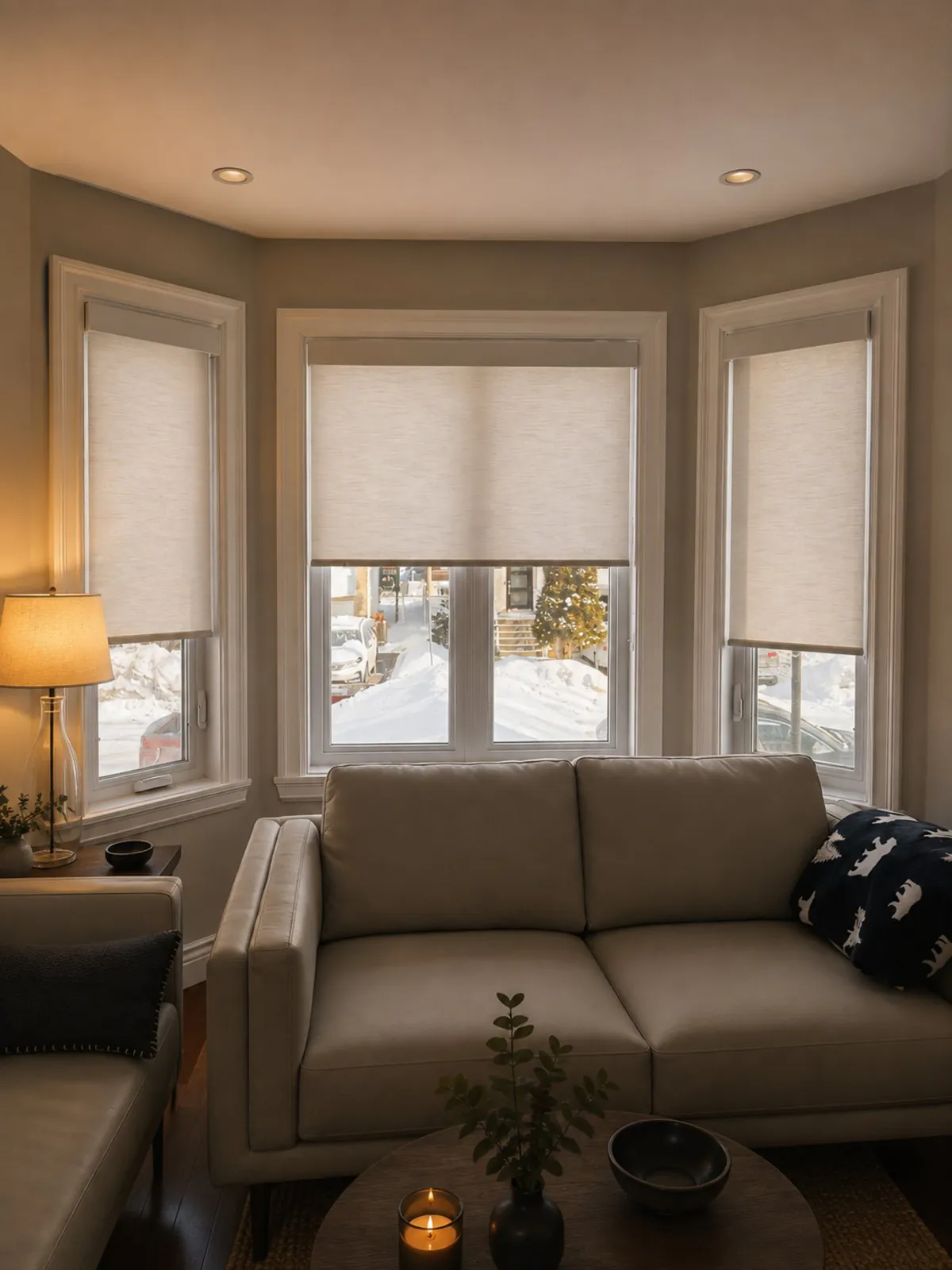
| Look | Clean, tailored, minimal. Vanish when raised. |
| Light control | Precise — from sheer to blackout; zebra and slats adjust by degrees. |
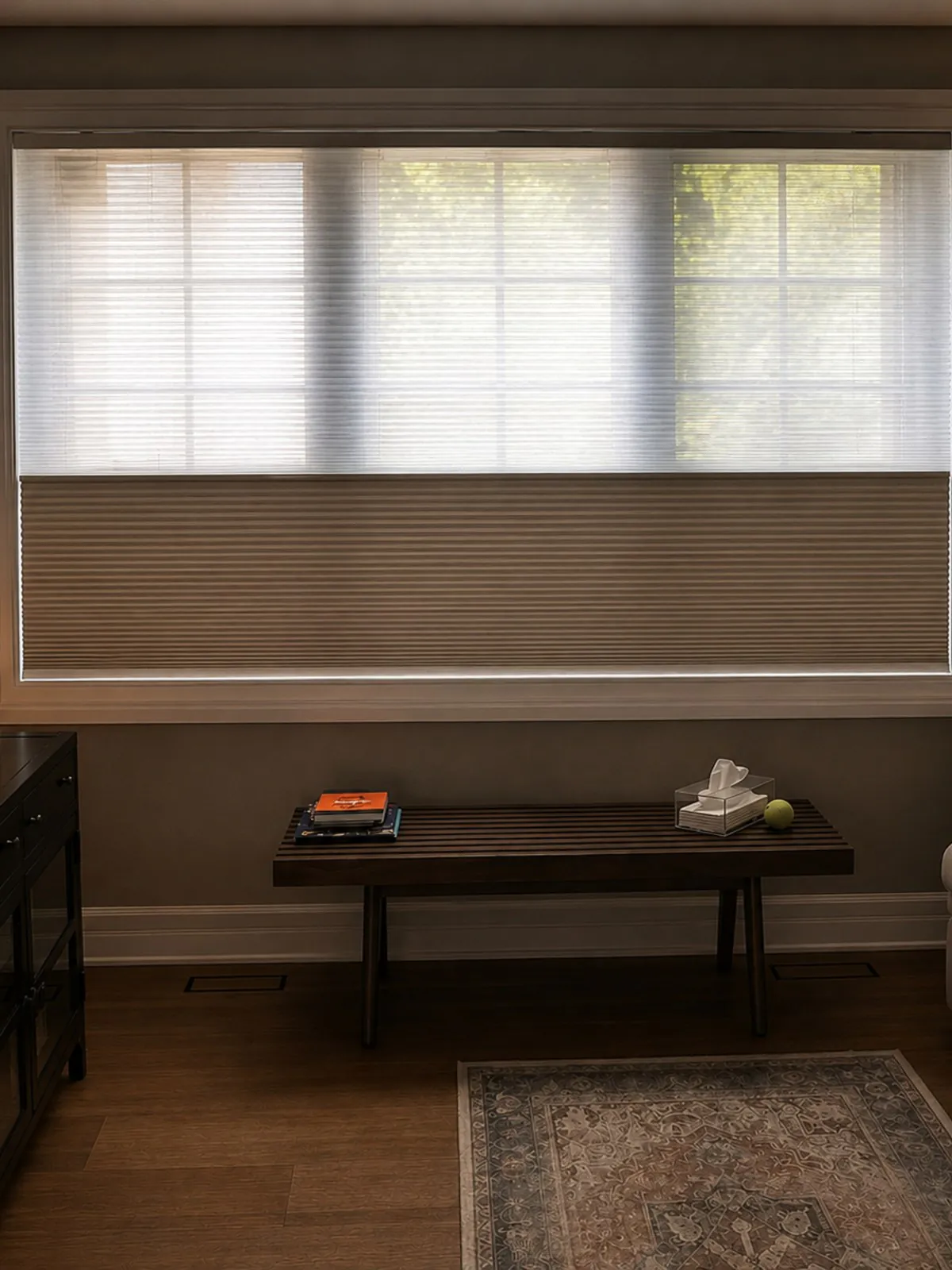
| Insulation | Honeycomb: excellent. Roller/zebra: modest. |
| Cleaning | Easy — dust or wipe. |
| Wet rooms | Yes — easy-clean fabrics. |
| Cost | Generally lower per window. |
| Curtains | |
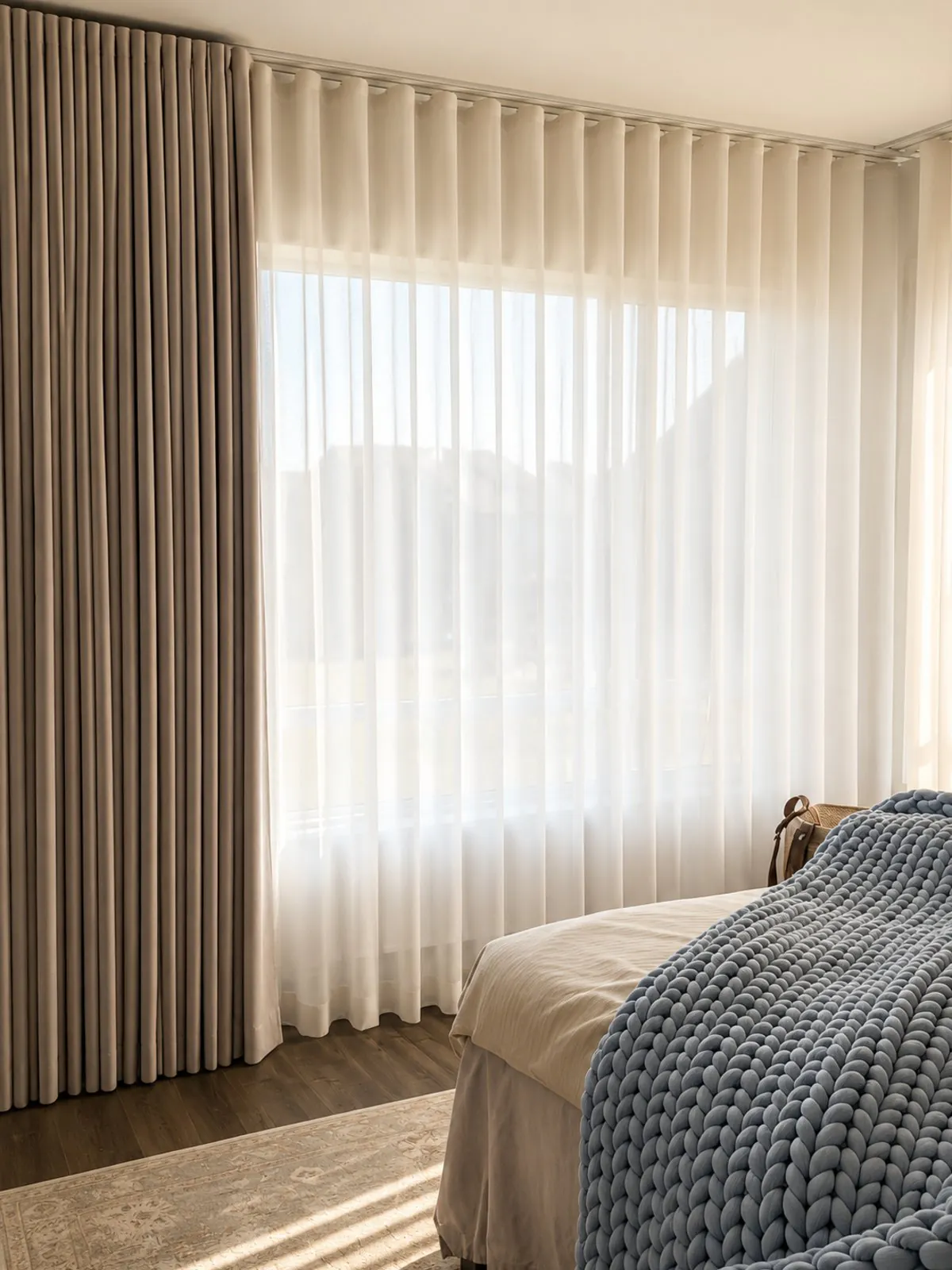
| Look | Soft, warm, dramatic. Make ceilings feel taller. |
| Light control | Open or closed; sheers for filtering, blackout lining for dark. |
| Insulation | Very good when lined; also absorb sound. |
| Cleaning | Periodic; depends on fabric. |
| Wet rooms | Not ideal. |
| Cost | More fabric + lining, so usually higher. |
Room by room
Living room
Both. A sheer curtain or zebra blind for daytime light and privacy, with curtains for warmth and evenings. If you must pick one: curtains for a soft, finished room; a zebra blind for a modern one with big glass.
Bedroom
Blackout is the priority — a blackout blind with side channels does the job best, and blackout-lined curtains over it give the hotel look. Cold room? Blackout honeycomb.
Kitchen & bathroom
Blinds. An easy-clean roller or a washable-fabric Roman shade. Curtains and steam/splashes don’t mix. Bathroom with a glass shower? Consider smart film.
Home office
Blinds — glare control matters most on a screen. A zebra or dim-out roller; honeycomb if the window is cold.
Dining room
Curtains or Roman shades — softness and a bit of occasion.
Kids’ room / nursery
Cordless blackout blind — safety and sleep. See the nursery guide.
Patio door / very wide window
Curtains on a track or a wide roller/zebra blind. Roman shades get heavy over ~2 m.
The designer answer: layer them
Walk through any well-designed home and you’ll notice most windows have two treatments: a functional layer for light and privacy (a blind or sheer) and a decorative layer for softness (curtains). You get precise control by day and warmth by night — and it photographs beautifully. It doesn’t have to be expensive: a simple roller or honeycomb behind a pair of lined curtains is a classic.
Wet or high-use room → blind. Room you relax in → curtains (or both). Bedroom → blackout first, style second. Cold window → honeycomb, whatever else you add.
Frequently asked questions
Are blinds or curtains better for insulation?
Lined curtains insulate well; honeycomb (cellular) blinds insulate best of any single treatment. Combining a honeycomb blind with lined curtains is the warmest option of all.
Are blinds or curtains cheaper?
Blinds are usually cheaper per window; curtains use more fabric plus lining. Layering both costs more but often replaces the need for a premium single treatment.
Can I have both blinds and curtains on one window?
Yes — it’s the classic designer approach. A blind or sheer for function, curtains for softness. We do this combination constantly.
What’s best for a bedroom?
Blackout. A blackout blind with side channels for real darkness, optionally with blackout-lined curtains over it. Add honeycomb if the room is cold.
Do you do both blinds and curtains?
Yes — all custom-made, and we install everything free across Quebec and Ontario.