No: as of 2026, blinds, curtains and other window coverings do not qualify for a Hydro-Québec rebate or any other Québec grant. Hydro-Québec’s LogisVert funds heat pumps, roof insulation with caulking and solar panels; Rénoclimat pays for the window, not the blind. Tightly fitted cellular shades are often worth it: Oak Ridge National Laboratory measured up to about 24% heating savings compared with ordinary venetian blinds.
The direct answer
Window coverings do not qualify for a Hydro-Québec rebate. Not blinds, not curtains, not cellular shades, not window film. There is no Québec program that pays you back for a blind.
If you're in Ontario instead, the answer is also no, but the programs are completely different — see rebates in Ontario.
The confusion is understandable, because two real programs sit right next to this subject:
LogisVert — heat pumps, roof insulation, solar
Hydro-Québec’s LogisVert program funds efficient heating and envelope work: heat pumps (including cold-climate and geothermal models), roof insulation done together with caulking ($1,500), solar panels ($1,000 per installed kilowatt, up to 40% of the cost), and a short list of efficient appliances such as induction ranges and heat-pump dryers. It does not cover doors and windows, and it certainly doesn’t cover what you hang in front of them.
Rénoclimat — the window itself, not the blind
Rénoclimat is the Québec government program for windows. Since 1 October 2026 it pays $300 per existing rough opening replaced with an ENERGY STAR Most Efficient window or patio door, up to $4,500 for a house ($6,000 for a duplex, triplex or multi-unit building). Two details catch people out:
- It’s per rough opening, not per pane. A bay window made of three units inside one opening is one $300 grant, not three.
- It’s full replacement only. Glass-only or sash-only swaps don’t qualify.
So if you’re replacing the window, there’s money on the table. If you’re dressing the window you already have, there isn’t.
Working out whether the replacement is worth it at all? We built a window replacement cost calculator with 2026 market ranges for Québec and Ontario, and this rebate already applied.
Ask which program, and ask for the measure name. There isn’t one. A quote that leans on a phantom rebate is a quote worth a second look.
So are insulating blinds worth it without a rebate?
Often, yes — and the case is stronger here than almost anywhere in North America, because our heating season is long and our windows are the weak point in the envelope.
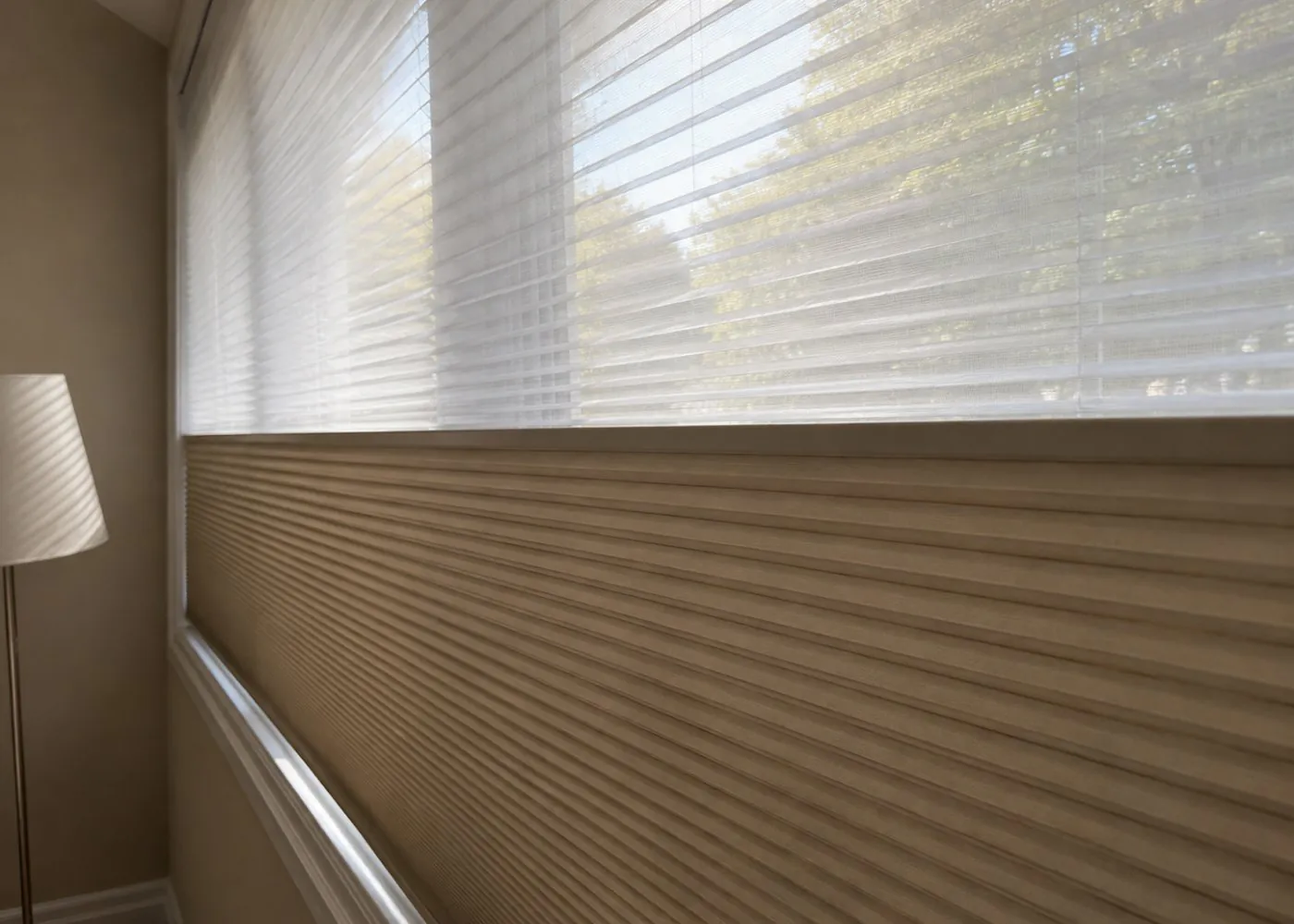
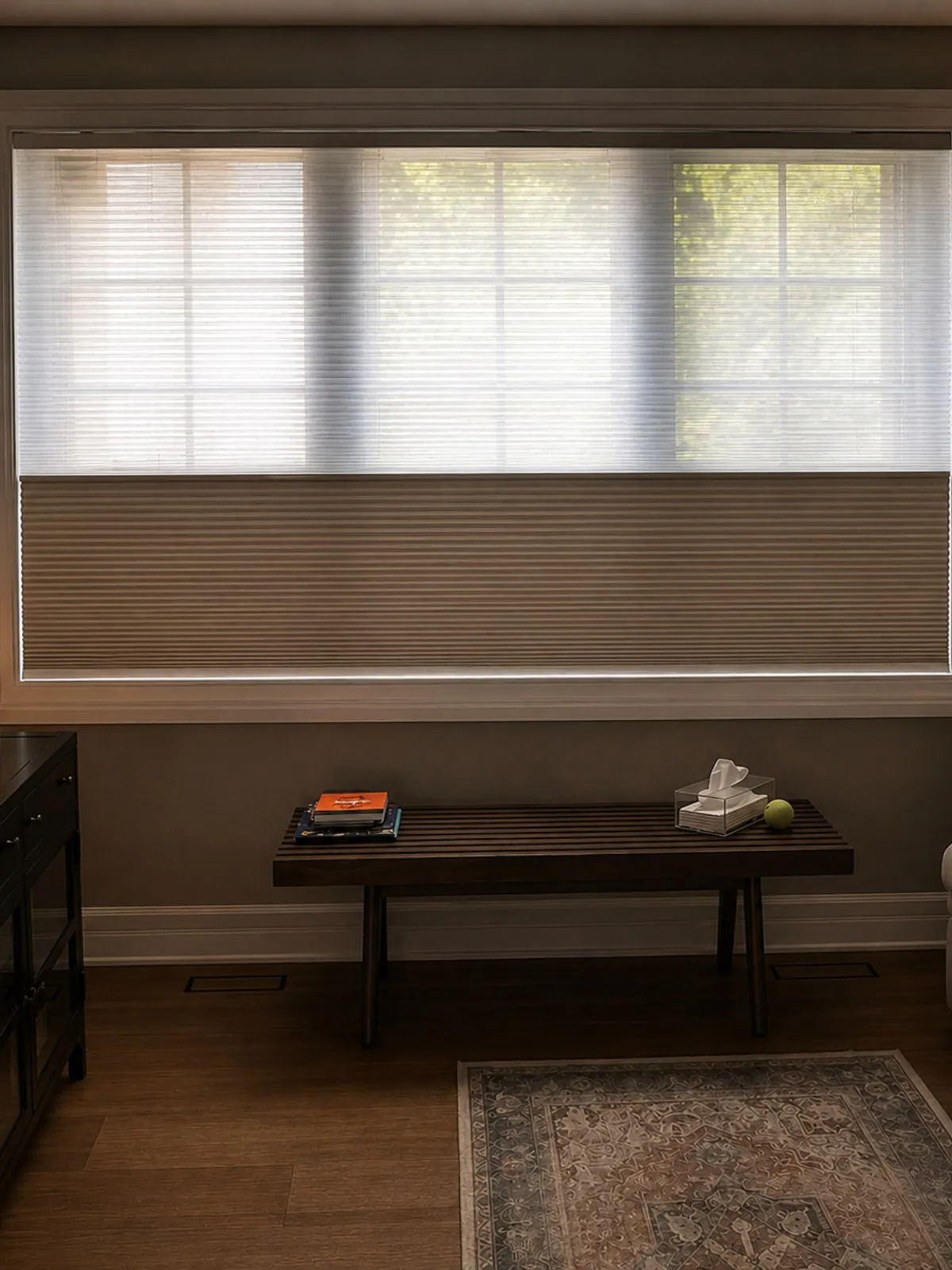
Cellular (honeycomb) shades are the only blind type that meaningfully insulates, and the research is real rather than marketing. Work at Oak Ridge National Laboratory measured heating energy savings of up to around 24% with cellular shades, compared with ordinary venetian blinds, and U.S. Department of Energy field studies have found whole-home summer cooling savings in the range of 15–25% from well-operated high-efficiency shades. Minnesota became the first U.S. state to formally list cellular shades among recognised energy-saving measures — a sign that the evidence is now taken seriously by regulators, even if Québec hasn’t followed.
A few honest caveats, because those numbers get quoted badly:
- They describe a tightly fitted shade — inside mount, minimal gaps, ideally side channels. A shade floating an inch off the frame leaks air around the edges and gives back much of the benefit.
- They describe a shade that gets used. Down at dusk in winter, down on sun in summer. This is the strongest practical argument for motorizing them on a schedule — automation converts a good product into an actual saving.
- Room-level savings are not house-level savings. A big north-facing window in a cold room is where you’ll notice it; a small window in a warm hallway isn’t.
At a glance
| Blinds & window coverings | No rebate in Québec |
|---|---|
| LogisVert covers | Heat pumps · roof insulation + caulking · solar panels · some appliances |
| LogisVert on doors & windows | Not covered |
| Rénoclimat covers | ENERGY STAR Most Efficient windows and patio doors |
| Rénoclimat amount, 2026 | $300 per existing rough opening, up to $4,500 for a house |
| Rénoclimat exclusions | Glass-only and sash-only replacements; doors other than patio doors |
| Best insulating covering | Cellular / honeycomb shades, tightly fitted |
What we’d actually do with the money
If your goal is a warmer home rather than a rebate, here’s the order we’d spend in — and the first two aren’t blinds:
- Air sealing. The cheapest comfort per dollar in almost every older Montreal home — and LogisVert pays $1,500 when caulking is done together with bringing the roof insulation up to standard.
- The window itself, if it’s failing. A single-pane or blown double-glazed unit is the actual problem; Rénoclimat helps pay for it. No blind fixes a broken window.
- Cellular shades on the coldest windows. Large, north-facing, or in rooms that never feel warm. Double cell for the worst of them.
- Automation, if the shades are on schedule-friendly windows. It’s what makes the insulation benefit real rather than theoretical.
The full ranking of what actually helps in a Montreal winter is in best blinds for Montreal winters, and the mechanics of how the cells work are in our honeycomb guide.
Getting the fit right matters more than the fabric
Since a cellular shade’s saving comes from trapped still air, gaps are the enemy. An inside mount measured properly, and side channels where the room justifies them, do more for the number on your bill than upgrading the fabric grade. That’s a measuring question, not a shopping question — see how to measure windows for blinds, or let us do it, free.
This page reflects the programs as they stand in 2026. Rebate rules in Québec get revised regularly — check Hydro-Québec and Québec.ca before you budget around any of it, and treat anything a contractor tells you about a grant as something to verify.
Working on a home on the Québec side? See what we recommend in Laval, on the South Shore, in the West Island and in Gatineau.
Frequently asked questions
Does Hydro-Québec give a rebate for blinds or curtains?
No. Hydro-Québec’s LogisVert program covers heat pumps, roof insulation combined with caulking, solar panels and a few efficient appliances. Window coverings are not an eligible measure, and neither are doors and windows.
Is there any Québec grant for window coverings?
Not as of 2026. The closest program is Rénoclimat, which pays $300 per rough opening — but for replacing the window itself, not for the blind in front of it.
How much is the Rénoclimat window grant?
$300 per existing rough opening replaced with an ENERGY STAR Most Efficient window or patio door, up to $4,500 for a house ($6,000 for a duplex, triplex or multi-unit building). It’s counted per opening, so a three-unit bay window in one opening receives one grant. Glass-only and sash-only replacements don’t qualify.
Do cellular blinds really save energy?
Yes, measurably. Oak Ridge National Laboratory measured up to roughly 24% heating energy savings with cellular shades compared with ordinary venetian blinds, and DOE field studies found 15–25% whole-home summer cooling savings from well-operated high-efficiency shades. The fit has to be tight and the shades have to actually be used.
What’s the single best window covering for cutting heating bills?
A double-cell honeycomb shade, inside-mounted with a tight fit, on your largest and coldest windows — ideally on an automatic schedule so it’s down every evening.
Do you help with rebate paperwork?
There’s no rebate on our product to apply for, so there’s nothing to file. If you’re replacing windows, you apply to Rénoclimat yourself once the work is done, with a form your window contractor fills in and signs, and we can fit the coverings afterwards.